
At its heart, labiaplasty is a surgical procedure that reshapes or reduces the size of the labia minora (the inner lips) or, less commonly, the labia majora (the outer lips). Women choose to have this surgery for a whole host of reasons, from relieving physical discomfort to achieving personal aesthetic goals.
Decoding Labiaplasty Surgery
The best way to think about labiaplasty is to see it as a procedure of personal refinement. It's a bit like having a favorite piece of clothing expertly tailored—the end goal is a better, more comfortable fit that makes you feel incredible. The surgery modifies the delicate tissues of the vulva for reasons that are entirely unique to you.
Most often, the procedure focuses on the labia minora, which are the inner folds of skin. Things like genetics, childbirth, or even just the natural aging process can cause them to become enlarged or asymmetrical. For some, this leads to very real, practical problems, making activities like cycling or even wearing fitted jeans uncomfortable. For others, the motivation is aesthetic—they simply want a look that feels more like them.
Why People Consider This Procedure
The reasons for considering labiaplasty are deeply personal and usually fall into two main categories: solving a functional problem or fulfilling an aesthetic desire. It’s important to know that both are completely valid.
- Functional Comfort: Many women live with daily physical discomfort because of enlarged labia. This can mean chafing during a run, twisting or pulling in tight clothing, and even pain during sex. The surgery is designed to put an end to these irritations.
- Aesthetic Confidence: It’s also very common for women to feel self-conscious about how their labia look. This is a personal choice aimed at improving body image and self-esteem. It's worth remembering that there's a huge range of what's considered "normal" anatomically. You can learn more about the differences between an “innie” and “outie” vagina to understand these variations better.
The decision to have a labiaplasty is incredibly personal. It’s about aligning your body with your own sense of comfort and confidence, whether your reasons are functional, aesthetic, or a mix of both.
Ultimately, the procedure is about creating a result that feels natural and comfortable for you. By carefully removing excess tissue, a surgeon can create a more streamlined contour, alleviating physical symptoms and helping you feel more at ease in your own body.
Labiaplasty At A Glance
To break it down even further, here's a quick summary of the key aspects of the surgery. This table gives you a high-level overview before we dive into the specific techniques, recovery details, and costs.
| Aspect | Description |
|---|---|
| Primary Goal | Reshape or reduce the labia minora or labia majora. |
| Main Reasons | To alleviate functional discomfort or achieve aesthetic goals. |
| Procedure Type | Typically an outpatient surgery, meaning you go home the same day. |
| Anesthesia | Can be performed under local anesthesia with sedation or general anesthesia. |
| Typical Duration | Usually takes between one to two hours to complete. |
This snapshot should give you a good starting point for understanding what the procedure involves.
Finding Comfort and Confidence
The decision to consider labiaplasty is always deeply personal. For most, it comes down to two interconnected goals: improving day-to-day functional comfort and boosting personal aesthetic confidence. Both are equally valid and important reasons to explore your options.
Many women are driven by the need for functional relief. When the labia minora are elongated or asymmetrical, they can cause persistent physical discomfort that gets in the way of everyday life. This isn't just a minor annoyance—it's a chronic issue that can genuinely affect a person's quality of life.
Alleviating Daily Physical Discomfort
Functional concerns almost always circle back to friction and irritation. Simple activities that should be enjoyable, like a spin class or a long run, can become painful. The constant rubbing against clothing leads to chafing, soreness, and frustrating skin irritation.
Common functional challenges include:
- Pain During Exercise: Activities like cycling, running, or even certain yoga poses can cause painful pulling, twisting, or pinching of the labial tissue.
- Clothing Discomfort: Wearing fitted clothing—think yoga pants, swimsuits, or skinny jeans—can be uncomfortable due to bulging, chafing, or a feeling of constant awareness.
- Interference with Intimacy: Discomfort during sexual intercourse is a frequent complaint. Excess tissue can get caught or pulled, causing pain that detracts from the experience.
- Hygiene Concerns: Some women find it harder to maintain hygiene, which can contribute to recurrent irritation or minor infections.
Getting these issues addressed is really about restoring a sense of normalcy and comfort to daily life. You can learn more by reading our guide on how labiaplasty can be beneficial for a deeper look.
Pursuing Personal Aesthetic Goals
Beyond the physical side of things, aesthetic motivations are a major factor. How you feel about your body directly impacts self-esteem and confidence. Changes from childbirth, aging, or simply genetics can leave you with a labial appearance that just doesn't feel like you.
The goal of aesthetic labiaplasty isn't about chasing some standardized ideal of "perfection." It's about creating a result that feels natural and right for you, helping you feel less self-conscious and more self-assured.
This desire for aesthetic harmony is a powerful and completely valid reason to consider the procedure. It's about feeling more at home in your own skin—whether you're in an intimate setting, at the gym, or just looking in the mirror. This growing focus on personal well-being has made the procedure far more common.
In fact, labiaplasty is now the world's fastest-growing cosmetic surgery. The International Society of Aesthetic Plastic Surgery (ISAPS) reported that 189,058 labiaplasty procedures were performed in 2023 alone. That's a staggering 65.64% increase since 2013, showing a huge shift in how openly people are addressing both functional and aesthetic genital concerns. You can explore the full global trends in cosmetic procedures to see this growth for yourself.
Who Is A Good Candidate For Labiaplasty?
Figuring out if labiaplasty is the right choice involves more than just having a functional or aesthetic concern. An ideal candidate is someone who meets certain criteria to ensure a safe procedure and a great outcome.
A good candidate usually has:
- Good Overall Health: Being in solid physical health is key to minimizing surgical risks and supporting a smooth, predictable recovery.
- Realistic Expectations: It’s crucial to have a clear understanding of what surgery can and cannot do. The goal is improvement, not an impossible ideal.
- Specific Concerns: You should be able to point to exactly what bothers you, whether it's physical pinching during exercise or an aesthetic issue with size or shape.
- Emotional Maturity: This decision should be yours alone, made for your own well-being and free from pressure from a partner or passing trends.
Ultimately, choosing labiaplasty is about taking control of your own comfort and confidence. By understanding what motivates you and making sure you're a suitable candidate, you can make an empowered, informed decision that aligns with your personal goals.
Understanding The Surgical Techniques
When you hear the term "labiaplasty surgery," it's easy to picture a single, standard procedure. The reality is much more nuanced. A surgeon's approach is carefully chosen based on your unique anatomy and what you're hoping to achieve. Think of it like a master tailor selecting a specific stitch or cut to create the perfect custom garment—it's not one-size-fits-all.
The ultimate goal is always a natural, balanced result that addresses your functional discomfort or aesthetic concerns. To get there, surgeons primarily rely on a few well-established techniques. Understanding the basics is the first step toward having a meaningful conversation with your surgeon about what’s right for you.
H3: The Trim Labiaplasty Technique
The Trim technique, sometimes called the edge excision method, is the most direct way to reduce the size of the labia minora. Just as the name implies, the surgeon carefully trims the excess tissue along the outer edge of the labia.
Imagine a piece of fabric that's a bit too long. The simplest fix is to cut along the bottom edge to the right length and then create a new hem. The Trim technique is very similar. After the excess tissue is removed, the surgeon meticulously sutures the new edge, creating a smaller, more compact labia. This method is often preferred for its straightforwardness and predictable results, especially for those who want a significant reduction in length.
H3: The Wedge Labiaplasty Technique
In contrast, the Wedge technique is all about preserving the natural, delicate outer edge of the labia minora. Instead of trimming along the border, the surgeon removes a V-shaped or pie-shaped wedge of tissue from the thickest part of the labia.
Once that wedge is gone, the two remaining edges are brought together and sutured. This maneuver effectively shortens the labia without changing its natural contour and coloration. It’s like taking a slice out of a pizza and then pushing the remaining pieces together—the original outer crust stays intact. Because it maintains the original labial border, many surgeons favor this method for creating an especially natural-looking outcome with less visible scarring.
To help you visualize the differences, here's a quick comparison:
H3: Comparing Common Labiaplasty Techniques
The choice between the Trim and Wedge techniques is a critical part of the surgical planning process. This table breaks down the core differences in approach, what they're best suited for, and potential drawbacks to consider.
| Technique | Procedure Description | Pros | Cons |
|---|---|---|---|
| Trim | Excess tissue is removed along the entire outer edge of the labia minora. | – Allows for a more dramatic reduction in size – Creates a smooth, uniform edge – Generally a more straightforward procedure |
– Removes the natural pigmented edge – Results in a longer scar along the new border – Can sometimes result in a less natural contour |
| Wedge | A V-shaped section of tissue is removed from the thickest part of the labia, and the edges are sutured together. | – Preserves the natural color and texture of the labial edge – Results in a smaller, more concealed scar – Often creates a more natural-looking outcome |
– Less suitable for very significant reductions – Can have a slightly higher risk of incision separation – Requires precise surgical technique to avoid bunching |
Ultimately, a skilled surgeon will assess your anatomy and discuss your goals to recommend the technique best suited for you.
The decision between Trim and Wedge often comes down to the existing shape of the labia, how much tissue needs to be removed, and your personal aesthetic preferences. It's a collaborative choice made with your surgeon.
The reasons for seeking surgery are deeply personal, but they almost always circle back to improving functional comfort or boosting aesthetic confidence.
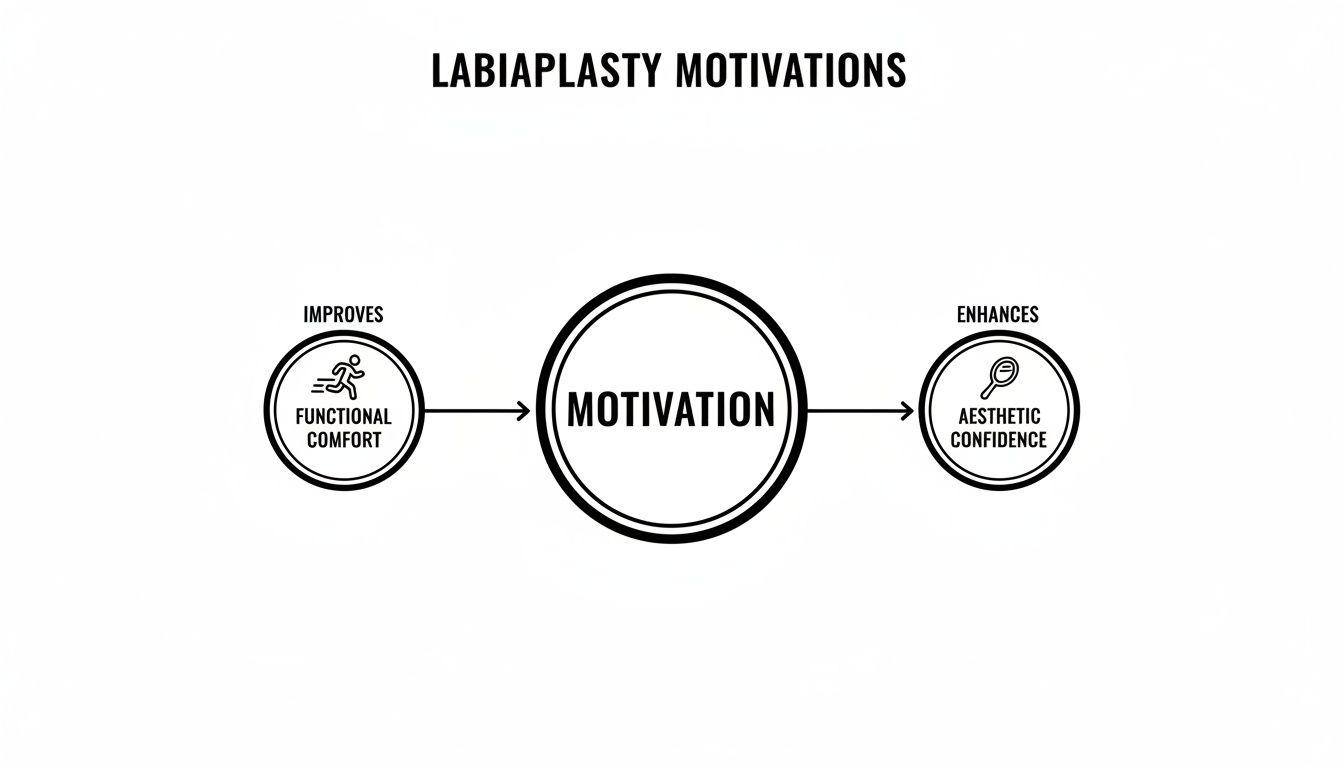
This diagram shows the two main drivers for labiaplasty, illustrating how physical relief and self-assurance both play a role. The takeaway is that the "why" behind the surgery is multifaceted, and for many patients, functional and aesthetic goals are equally important. You can dive deeper by exploring our detailed guide on the different labiaplasty techniques available.
H3: Considering Clitoral Hood Reduction
Sometimes, just addressing the labia minora isn't enough to create a completely harmonious result. The clitoral hood is the fold of skin protecting the clitoris, and if it's also prominent, reducing the labia can make the clitoral hood look disproportionately large.
To make sure everything looks balanced and natural, a clitoral hood reduction is often performed at the same time as a labiaplasty. This complementary procedure involves removing a small amount of excess tissue from the sides of the hood.
- Goal: To create a balanced and aesthetically pleasing appearance between the clitoris and the newly resized labia.
- Procedure: It's typically done in conjunction with either the Trim or Wedge technique.
- Consideration: Your surgeon will assess if this is needed to achieve your desired outcome during your consultation.
In the end, combining procedures is about ensuring a cohesive final look where all the elements are in proportion. Your surgeon will evaluate your anatomy and discuss whether a clitoral hood reduction is a necessary step for you.
Your Journey From Consultation To Full Recovery
Understanding the what of labiaplasty surgery is one thing, but knowing what to expect from your first meeting with a surgeon all the way through your final recovery is what truly prepares you for the journey ahead. Think of it as a detailed roadmap with specific milestones, starting with that initial conversation and ending only when you’re fully healed and enjoying your results.
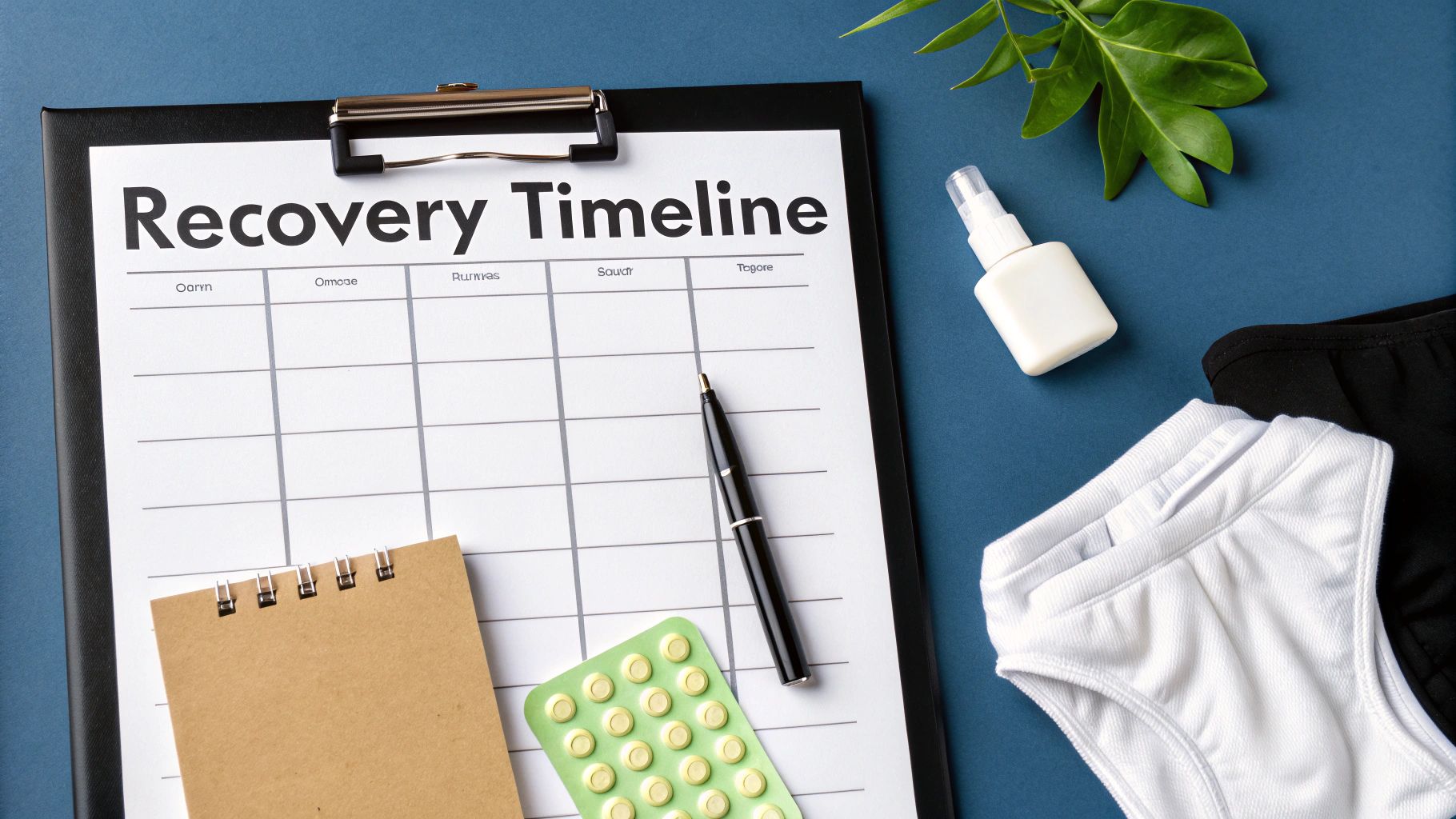
The path begins with finding a qualified, board-certified plastic surgeon who specializes in this exact procedure. Your consultation is a critical moment to build trust, get answers, and make sure you and your surgeon are perfectly aligned on your goals.
Your First Consultation
The consultation should feel like a two-way conversation, not a sales pitch. This is your time to openly discuss your functional or aesthetic concerns, and it's the surgeon's opportunity to evaluate your anatomy and confirm you're a good candidate. More importantly, it’s the time to set realistic expectations.
Come prepared with a list of questions to make the most of this meeting. Here are a few essentials to cover:
- Surgeon’s Experience: "How many labiaplasty procedures have you performed?"
- Recommended Technique: "Which surgical technique—Trim or Wedge—do you recommend for my anatomy, and why?"
- Anesthesia: "What type of anesthesia will be used for my surgery?"
- Recovery Details: "What does the recovery timeline really look like, and how much downtime should I plan for?"
- Before-and-After Photos: "Can I see photos of your previous patients who had similar anatomy to mine?"
This initial meeting lays the groundwork for your entire experience. A great surgeon will listen intently, answer every question without rushing, and provide a clear, personalized surgical plan that makes you feel confident.
Preparing for Surgery Day
Once your procedure is scheduled, you'll receive a set of pre-operative instructions. Following these guidelines to the letter is absolutely vital for a safe surgery and a smooth recovery.
Common preparations often include:
- Stopping certain medications like blood thinners, aspirin, and even some herbal supplements that can increase bleeding.
- Avoiding all smoking and nicotine products for several weeks before and after surgery, as they seriously impair your body's ability to heal.
- Arranging for a trusted friend or family member to drive you home and help you out for the first 24-48 hours.
Think of this preparation phase as setting the stage for success. By taking care of your body beforehand, you create the best possible conditions for it to heal efficiently after the procedure.
While labiaplasty is a popular choice for a diverse range of women, it holds particular appeal for younger adults. Data from 2025 reveals that 48.4% of all external genital surgeries were performed on patients aged 18 to 34, highlighting its relevance in addressing concerns that arise early in adulthood. You can explore more vaginal rejuvenation market trends on techsciresearch.com.
The Labiaplasty Recovery Timeline
Recovery is a gradual process, and each stage brings you one step closer to your final result. While everyone's body heals at its own pace, a general timeline can help you know what to expect along the way.
The First 48 Hours
This is when you'll experience the most significant discomfort and swelling. Your number one job is to rest. You will likely feel sore, but this can be managed with prescribed pain medication and by applying cold compresses intermittently to the area.
Week 1
Swelling and bruising are still very present, but they should start to improve day by day. You’ll be able to move around gently, but you must avoid any strenuous activity. Most patients feel comfortable enough to return to a desk job or remote work within 5-7 days.
Weeks 2-3
You'll notice a huge reduction in swelling and discomfort. Walking and sitting will finally feel much more comfortable. While you can resume light daily activities, you should continue to avoid exercise and any heavy lifting.
Weeks 4-6
By this point, most of the obvious swelling will be gone, and you’ll feel much more like yourself. Your surgeon will likely give you the green light to resume light exercise. It is crucial to wait until the full six-week mark—or until you have explicit clearance from your surgeon—before resuming sexual activity and more vigorous workouts.
Months 2-6
Any leftover swelling will continue to fade, and your final, refined results will become fully apparent. Scar tissue will soften and become less noticeable, allowing the new contours to settle completely. Patience is key during this final stage as your body finishes its healing process.
Navigating Costs And Understanding The Risks
Making a truly informed decision about labiaplasty means taking a clear-eyed look at two crucial elements: the financial investment and the potential health considerations. An open, honest conversation about both the costs and the risks is absolutely essential for feeling prepared and confident in your choice. It's all about balancing your personal goals with the practical realities of surgery.
One of the first questions on everyone's mind is, understandably, about the price tag. The total cost isn't just a single number but a sum of several different fees. Knowing what those are is the first step in planning your budget.
Breaking Down The Cost Of Labiaplasty
The final cost of your labiaplasty can vary quite a bit, influenced by things like your surgeon's experience and even where you live. Demand for this procedure is much higher in certain parts of the world. For instance, in 2016, the United States saw 13,266 procedures, while Brazil led with 23,155. This kind of geographic demand definitely impacts availability and pricing. You can learn more about these global labiaplasty trends from ISAPS data on kommunikasjon.ntb.no.
When you get a price quote from a surgeon's office, it will typically include a few key components:
- Surgeon's Fee: This covers the surgeon's time, skill, and expertise. It's usually the biggest slice of the pie.
- Anesthesia Fee: This pays for the anesthesiologist’s services and the medications needed to keep you safe and comfortable during the surgery.
- Facility Fee: This charge covers the use of the operating room, all the surgical supplies, and the amazing support from the nursing staff at the hospital or surgical center.
Because labiaplasty is almost always considered an elective cosmetic procedure, insurance coverage is rare. There are exceptions, of course. If the surgery is deemed medically necessary to fix documented functional problems like chronic pain or tearing, some insurance plans might offer partial coverage. Just be prepared for what is often a lengthy and detailed approval process.
Most clinics offer financing plans through third-party medical credit companies. These plans allow you to pay for the procedure in manageable monthly installments, making the investment more accessible.
It’s a great idea to discuss all your payment and financing options with the clinic’s staff during your consultation. They can walk you through the specifics and help you find a plan that works for you.
Understanding Potential Risks And Complications
Every surgical procedure, no matter how routine, comes with potential risks. A surgeon who is transparent and open about these possibilities isn't trying to scare you—they're being responsible. The key is to understand the difference between common, temporary side effects and the less common but more serious complications.
Most patients will experience some expected side effects as part of the normal healing process. These are generally easy to manage and go away on their own with good aftercare.
Common Temporary Side Effects
- Swelling and Bruising: This is most noticeable in the first week or two and then gradually fades.
- Mild to Moderate Discomfort: Any pain is usually well-managed with prescribed medication and gets much better after the first few days.
- Itching: It’s a good sign! Itching around the incisions is a normal part of healing.
- Temporary Numbness: It's common to have some altered sensation as the nerves heal. Feeling usually returns over several weeks or months.
While rare, more serious complications can happen. Choosing a board-certified plastic surgeon with deep experience in labiaplasty is the single best way to dramatically lower these risks.
Less Common Complications
- Infection: Following your hygiene instructions and taking any prescribed antibiotics is critical for prevention.
- Wound Dehiscence: This is when the edges of the incision separate. It can happen if there’s too much tension on the stitches or if healing is slowed for some reason.
- Over-resection or Under-resection: Removing too much tissue can cause functional issues, while removing too little can leave you with a result you're not happy with.
- Scarring: Scars are an unavoidable part of any surgery. A skilled surgeon, however, knows how to place incisions so they are discreet and minimally visible once they’ve healed.
- Permanent Sensation Changes: With modern techniques, this is exceptionally rare, but there is a very small risk of permanent changes to sexual sensation.
A thorough consultation should always include a frank conversation about these risks. Your surgeon will explain exactly how they minimize these issues and what you can do to ensure the safest, smoothest outcome possible.
Answering Your Final Questions About Labiaplasty
Even after you’ve done your research, it’s normal to have a few more specific questions floating around. Let's tackle some of the most common things patients ask about the procedure, the healing process, and what life is like afterward. This is where we get direct and clear, so you feel completely confident in your decision.
Will Labiaplasty Affect Sensation or Sexual Function?
This is, understandably, a top concern for nearly everyone considering this surgery. The good news is that when performed by a skilled, board-certified surgeon, the risk to sexual sensation is extremely low.
Modern surgical techniques, particularly the wedge method, are specifically designed to preserve the nerve-rich edges of the labia. The entire point is to reshape and reduce tissue, not interfere with its function.
In fact, many patients report a noticeable increase in sexual confidence and comfort after they’ve fully healed. Why? Because the physical irritation, tugging, or self-consciousness that got in the way of intimacy is finally gone. While any surgery has a tiny risk of altered sensation, choosing a specialist who has deep experience in what is labiaplasty surgery makes this possibility incredibly remote. It’s a crucial topic to discuss openly with your surgeon.
How Much Time Should I Take Off From Work?
How much downtime you’ll need really comes down to what you do for a living. Planning for proper rest is one of the single most important things you can do for a smooth, easy recovery.
- For Desk Jobs: If you work in an office or from home, plan on taking 5 to 7 days off. This gets you past that initial peak of swelling and discomfort, making it much more comfortable to sit for longer periods.
- For Physically Demanding Jobs: If your job involves a lot of standing, walking, or any heavy lifting, you’ll want to schedule at least 10 to 14 days off. Your body will thank you for giving it that extra time to heal without stress.
The most important rule? No matter what your job is, all strenuous activity—like intense exercise, running, and sex—is off-limits for a full 4 to 6 weeks. Sometimes longer. Your surgeon will give you the green light when your body is ready. Putting your feet up early on is the secret to a faster recovery.
When Will I See the Final Results?
You’ll see a difference right away, but it’s so important to remember that what you see on day one is not the final look. Healing is a process, and patience is your best friend.
Swelling is totally normal and hits its peak in the first couple of weeks. After that, it will go down dramatically, and you’ll get a much clearer idea of your new shape.
But some minor, subtle swelling can stick around for 3 to 6 months as the delicate tissues fully settle and soften. Most patients feel like they have a great sense of their final outcome by the three-month mark. The true, fully settled results are usually visible around six months post-op, once everything has completely matured.
Is Labiaplasty Covered by Insurance?
This is a big question, and for most people, the answer is no. Labiaplasty is almost always considered an elective cosmetic procedure, so health insurance plans won't cover it.
There is one potential exception: medical necessity. If enlarged labia cause well-documented functional issues—like chronic pain, repeated tearing during exercise, or frequent infections that disrupt your daily life—there's a small chance of getting coverage.
Getting approval requires a mountain of paperwork from your doctor to prove to the insurance company that it's not just a cosmetic concern. The process is tough, often long, and there’s never a guarantee. The best first step is to talk to your surgeon's office staff; they’ve been through it before and can help you figure out if it’s a path worth exploring.
What Happens to the Stitches?
Here’s some good news for your recovery: most surgeons now use dissolvable sutures. This is a huge plus for comfort, as it means you won’t have to come back to have them painfully removed.
These special stitches are designed to be absorbed by your body over a few weeks. They’ll gradually fall out on their own as you heal, so don't be surprised if you see little pieces of suture material during the first few weeks. It’s a completely normal sign that your body is healing just as it should.
Can I Use Tampons After Surgery?
After your procedure, it’s critical to avoid inserting anything into the vagina. The area needs to heal without any disruption or risk of infection, and that includes tampons.
You’ll need to stick with sanitary pads for your first period after surgery. Most surgeons advise waiting at least six weeks before going back to tampons. Be sure to follow the exact timeline your surgeon gives you—they’ll let you know when it’s officially safe to make the switch.
At Labiaplasty.com, our goal is to give you the clear, reliable information you need to make decisions that feel right for you. From understanding the surgery to finding the best surgeon, we’re here to support you every step of the way.
Find a qualified surgeon and view photo galleries at https://labiaplasty.com.
