

A labia majora reduction is a highly personal surgical procedure that reshapes and reduces the size of the outer vaginal lips. The goal is to address concerns about excess volume, loose or sagging skin, or asymmetry, ultimately creating a more comfortable and aesthetically pleasing contour. It's a procedure focused entirely on the outer lips, which sets it apart from a labia minora reduction (labiaplasty).
Understanding Labia Majora Reduction

Most women who come to me for a labia majora reduction are looking for a solution that balances function with aesthetics. It’s never about a dramatic overhaul; instead, think of it as a subtle refinement. Much like a tailor alters a favorite piece of clothing for that perfect, comfortable fit, this procedure refines your anatomy to better align with your body and lifestyle.
The labia majora are the protective, fleshy outer folds of the vulva. Life events like childbirth, major weight changes, and simply the natural aging process can alter their appearance. For some, this means a loss of volume, leaving the skin looking deflated or loose. For others, it results in excess fatty tissue that creates a prominent bulge, causing discomfort in clothing.
To give you a clearer picture, here’s a quick summary of what the procedure entails.
Labia Majora Reduction At a Glance
| Aspect | Description |
|---|---|
| Primary Goals | Reduce excess volume, tighten loose skin, improve symmetry, and alleviate chafing. |
| Surgical Methods | Direct excision (removing excess skin and fat) or liposuction (for volume reduction). |
| Anesthesia | Typically performed under local anesthesia with sedation or general anesthesia. |
| Procedure Time | 1-2 hours, depending on the complexity and technique used. |
| Recovery Period | Initial healing takes about 2 weeks; full recovery and return to all activities in 6-8 weeks. |
| Cost Range | Varies widely based on surgeon, location, and surgical plan, but generally $4,000 – $8,000. |
This table provides a high-level overview, but the specifics of your procedure will always depend on your unique anatomy and personal goals, which we would discuss in detail during a consultation.
Distinguishing Majora from Minora Procedures
It’s crucial to understand how this surgery differs from a labiaplasty that targets the labia minora (the inner lips). While they both fall under the umbrella of cosmetic gynecology, they address completely different parts of the anatomy for different reasons.
- Labia Majora Reduction: This focuses on the outer lips. The main objective is usually to reduce a bulge caused by excess fat or to tighten up skin that has become loose and saggy.
- Labia Minora Reduction: This procedure deals with the inner lips. It’s typically done to trim excess tissue that hangs down, gets twisted, or causes physical irritation.
In many cases, I perform both procedures together to create a harmonious and balanced result. Getting familiar with the variations between an "innie" and "outie" vulva can also help you understand the wide range of what's considered normal anatomy.
At its core, a labia majora reduction is about aligning your physical self with your personal comfort and aesthetic goals. It’s a solution for those who experience physical discomfort from chafing or feel self-conscious about changes in their anatomy.
Why People Choose This Surgery
The reasons for choosing a labia majora reduction are deeply personal and always valid. For some women, the issue is purely functional. Prominent outer labia can cause constant chafing and irritation when wearing jeans, workout leggings, or swimwear. This isn't just an inconvenience; it can be a source of chronic discomfort.
For others, the motivation is more about aesthetics. They might feel self-conscious about a contour that has changed after having children or losing a significant amount of weight. The goal is simply to restore a look that feels more like their own.
Reasons for Considering This Procedure
The decision to have a labia majora reduction is an incredibly personal one. For some, it’s about finally finding relief from physical discomfort that gets in the way of daily life. For others, it's about reclaiming aesthetic confidence. Often, it's a mix of both, and every reason is completely valid.
If you're considering it, you're not alone. The procedure is becoming much more common. In 2019, there were 164,667 labiaplasty procedures performed worldwide—which often includes work on the labia majora—marking a 73.3% jump from 2015. This isn't just a trend; it shows that more and more women are actively seeking solutions for issues that affect their comfort and self-esteem.
Seeking Functional Relief from Discomfort
For many women, the motivation is purely functional. When the labia majora have excess skin or volume, they can cause frustrating and persistent physical problems that genuinely impact your quality of life.
Think about the simple act of putting on your favorite jeans, only to deal with constant chafing with every step you take. Or imagine the irritation and rawness from friction during a spin class or a long run. These aren't small annoyances—they're daily issues that can turn enjoyable activities into a source of dread.
Common functional concerns we hear from patients include:
- Persistent Chafing: Fabric from tight clothing like jeans, leggings, or workout gear constantly rubs against the labia, leaving the skin sore and irritated.
- Exercise-Related Pain: High-impact activities such as cycling, running, or horseback riding can cause pinching, twisting, or direct pressure on prominent labial tissue.
- Discomfort During Intimacy: For some, the size or shape of the labia majora can lead to physical discomfort or self-consciousness during sex.
- Hygiene Difficulties: Excess skin folds can sometimes make personal hygiene more challenging to maintain.
A labia majora reduction can bring profound relief, allowing you to move, dress, and live with more freedom and comfort. You can learn more about the medical reasons for labiaplasty which often overlap with these functional benefits.
Pursuing Aesthetic Harmony and Confidence
Wanting to feel good about how you look is an equally important and valid reason to consider this surgery. The appearance of the labia majora can change dramatically after major life events, and it’s completely natural to want to restore a look that feels more familiar or youthful.
Many patients I speak with aren't chasing some ideal of perfection. Their goal is to restore a look that feels more harmonious with the rest of their body. It’s about feeling truly comfortable and confident in your own skin, whether you're dressed or not.
Certain life events are common triggers for these changes:
- Childbirth: The hormonal shifts and physical stretching from pregnancy and delivery can leave the labia majora with lasting skin laxity and lost volume.
- Major Weight Fluctuations: Gaining and then losing a significant amount of weight can leave the skin stretched and deflated, much like it does in other areas of the body.
- Natural Aging: As we age, our bodies naturally produce less collagen and lose fat. This can cause the once-full labia majora to look elongated or saggy.
For many, a labia majora reduction is about addressing these changes to create a smoother, more balanced, and symmetric appearance. The positive impact this can have on body image and self-esteem is often life-changing.
Understanding the Surgical Techniques
When it comes to a labia majora reduction, there is no one-size-fits-all approach. A skilled surgeon will choose the right technique based on your unique anatomy and what you hope to achieve. Think of it like a sculptor deciding between a chisel or a sanding tool—each serves a different purpose to bring the final vision to life.
The two main methods we use are direct excision and liposuction. For patients looking to restore volume rather than reduce it, we often turn to a complementary technique called fat grafting. Knowing how each of these works will help you have a much more productive conversation with your surgeon.
While early medical papers from the 1980s touched on these procedures for physical comfort, female genital cosmetic surgery really saw a dramatic rise after the year 2000. By 2019, the number of worldwide procedures reached 164,667, as surgeons refined their methods to create beautifully balanced and natural-looking contours.
Direct Excision for Skin and Tissue Removal
Direct excision is the most common technique for addressing loose or sagging skin on the labia majora. This is our go-to method when the main concern is extra skin, not just excess volume.
Imagine a tailor skillfully removing a sliver of fabric from a garment to create a smoother, more fitted silhouette. Direct excision works in a very similar way. Your surgeon makes a precise incision, usually hidden within the natural crease between the labia majora and minora, and removes a carefully measured section of skin and underlying tissue.
Once the excess tissue is gone, the remaining skin is meticulously sutured back together. This not only reduces the overall size but also tightens the area for a firmer, more youthful appearance. Because the incision is so strategically placed, the scar is usually very discreet and fades beautifully over time.
Liposuction for Volume Reduction
Sometimes, the issue isn't loose skin but an excess of fatty tissue creating a prominent bulge. This is where liposuction is the perfect solution. It’s a less invasive option designed specifically to remove fat, not skin.
Think of this technique like carefully letting air out of an overinflated balloon. The goal is to reduce the volume for a sleeker profile without altering the surface itself.
During liposuction, the surgeon makes one or two tiny incisions, just large enough to insert a thin tube called a cannula. This tool is used to gently break up and suction out the unwanted fat cells, sculpting the labia majora into a smaller, more proportionate shape.
This method works best for patients who still have good skin elasticity. If the skin is already loose, removing the underlying fat could actually make the sagging more noticeable. For a closer look at different surgical methods, you might find it helpful to compare the top labiaplasty techniques explained in our guide, which details related procedures.
Fat Grafting for Restoring Volume
While many patients seek reduction, some face the opposite problem: a deflated or hollowed look caused by aging or significant weight loss. For these cases, fat grafting is an excellent complementary technique.
This procedure involves three key steps:
- Harvesting: Fat is gently removed via liposuction from another part of your body, like the abdomen or thighs.
- Purification: The collected fat is then processed to separate the pure, healthy fat cells from other fluids.
- Injection: Finally, these purified fat cells are skillfully injected into the labia majora to restore lost volume, creating a fuller, smoother, and more rejuvenated appearance.
Using your own body's fat ensures a natural-looking result and nearly eliminates the risk of rejection. Fat grafting can be performed on its own or combined with an excision to both tighten skin and add youthful plumpness. Each of these techniques offers a distinct path toward achieving the outcome that’s right for you.
Are You a Good Candidate for This Procedure?
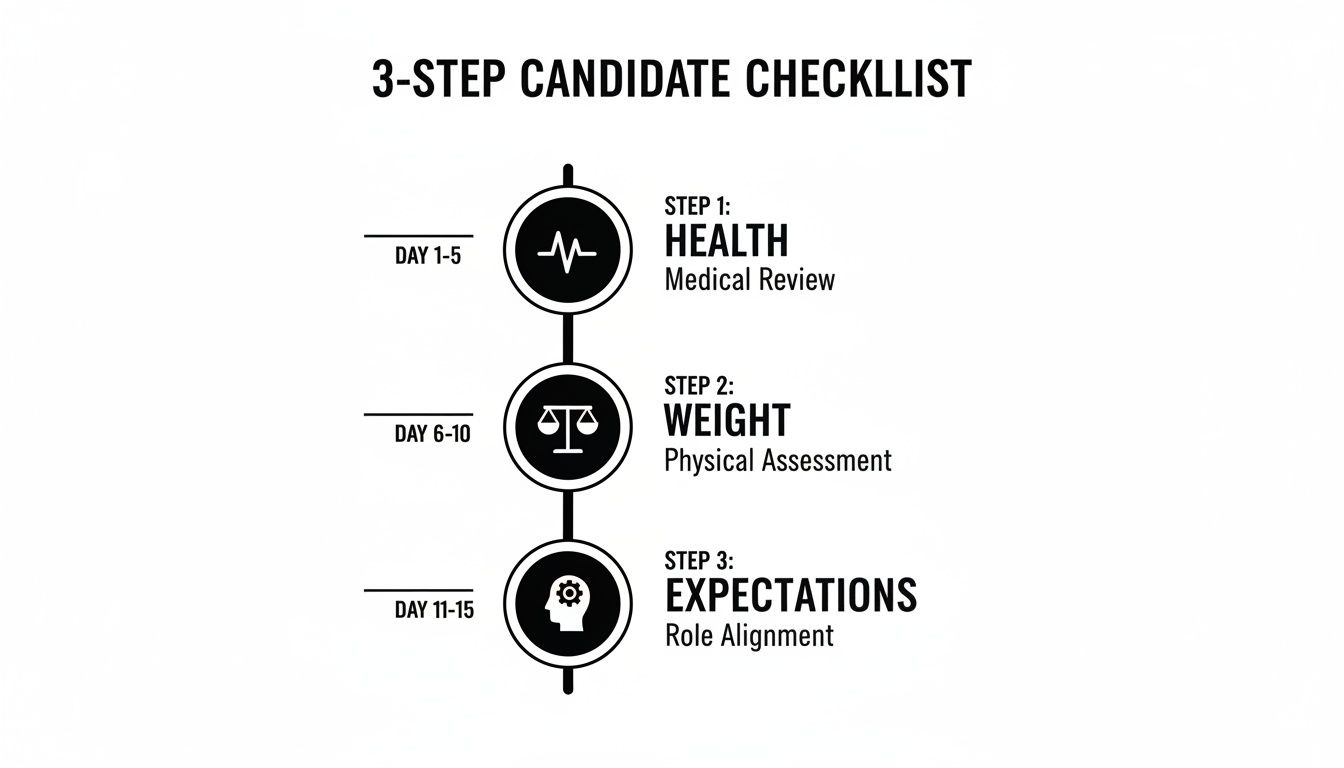
Deciding to have a labia majora reduction is a deeply personal choice, and it's about much more than just what you see in the mirror. It’s a process that involves looking at your overall health, your lifestyle, and what you hope to achieve. The happiest patients are those who are a great match for the surgery, both physically and emotionally.
The best candidate is someone pursuing this for their own reasons—whether that's to finally get relief from physical discomfort or to simply feel more at home in their body. It's a decision you make for yourself, not for a partner or to fit some external beauty standard. A clear, realistic understanding of what the surgery can and can't do is the best starting point for a positive journey.
Key Health and Lifestyle Factors
During your consultation, your surgeon will go over several key factors to make sure the procedure is a safe and effective option for you. Think of these as the essential groundwork for a smooth surgery and an even smoother recovery.
Generally, a good candidate is someone who can say yes to the following:
- You're in Good Overall Health: You shouldn’t have any serious medical issues that could interfere with healing or add unnecessary surgical risks. Things like uncontrolled diabetes or certain heart conditions will need to be well-managed before an elective procedure is on the table.
- Your Weight Is Stable: Big swings in your weight after surgery can definitely change your results. It's best to be at or close to a stable weight you've maintained for at least a few months before your procedure.
- You Don't Smoke: This is a big one. Smoking and any nicotine use are major hurdles for healing. They shrink your blood vessels, which can lead to poor wound healing, a higher risk of infection, and scars that are more noticeable. You’ll be asked to stop for several weeks before and after your surgery.
These aren't just minor suggestions; they are critical for your safety and for making sure you get the beautiful, lasting results you’re looking for.
Candidacy is really a partnership between you and your surgeon. It’s about making sure the procedure is physically appropriate and that your goals line up with what surgery can realistically and safely deliver.
Physical Indicators for Candidacy
Beyond your general health, there are specific physical signs that make someone a prime candidate for a labia majora reduction. These are the very issues the surgery is designed to fix.
This might be the right fit for you if you're dealing with:
- Significant Skin Laxity: This often happens after having children, losing a lot of weight, or just from the natural aging process. It can leave the labia majora looking empty or saggy.
- Excess Volume or Fullness: Some women naturally have more fatty tissue in the labia majora, which can create a bulge that makes certain clothes uncomfortable or causes self-consciousness.
- Asymmetry: It's very normal for there to be some difference between the two sides, but if it's a noticeable difference in size or shape, surgery can create a more balanced look.
- Functional Discomfort: If the size of your labia majora is causing you chronic chafing, irritation when you exercise, or getting in the way of daily activities, you are likely an excellent candidate.
On the flip side, there are times when a labia majora reduction might not be the best or safest choice.
Reasons You Might Not Be a Candidate
Certain conditions, which surgeons call contraindications, can make the surgery unsafe. This could include an active genital infection (like a yeast infection or STD), a history of forming keloids or poor scars, or having unrealistic expectations about the outcome. Your surgeon will do a thorough evaluation to make sure it's safe for you to move forward.
Your Surgical Journey from Start to Finish
Deciding to have a labia majora reduction is a big step, but knowing exactly what to expect can turn any anxiety into confident anticipation. The whole process is carefully mapped out, from your initial chat with the surgeon to seeing your final results, ensuring everything is as safe, comfortable, and predictable as possible.
Think of your journey in three main stages: the preparation phase, the day of surgery itself, and the all-important recovery period. Each part has its own set of guidelines designed to help you heal beautifully and achieve the outcome you’re hoping for.
Before Your Surgery: The Consultation and Preparation Phase
Everything starts with a private, in-depth consultation with a board-certified plastic surgeon. This is your time to talk openly about what’s bothering you, what you hope to achieve, and any physical discomfort you're experiencing. Your surgeon will do a physical exam, go over your medical history, and explain the best surgical techniques for your specific anatomy.
This is the perfect time to ask every single question you have. Get ready to discuss:
- Your personal reasons for wanting a labia majora reduction.
- All medications you're currently taking, including vitamins and supplements.
- Your lifestyle habits, especially if you smoke or use any nicotine products.
A great consultation is really a conversation. Your surgeon’s job is to offer expert advice and set clear, realistic expectations. Your role is to be completely honest about your goals and health so they can create a plan that’s perfect—and safe—for you.
Once you’ve settled on a surgical plan, you’ll get a list of pre-operative instructions. Following these to the letter is absolutely crucial for your safety and for getting the best possible healing.
Here are some of the common prep steps:
- Pausing Certain Medications: You’ll likely be asked to stop taking blood-thinning medications like aspirin and ibuprofen, as well as some supplements (like vitamin E), for about two weeks before your surgery. This helps keep bruising to a minimum.
- Stopping Nicotine Use: This is a non-negotiable. All smoking and nicotine products must be stopped at least 4-6 weeks before and after the procedure. Nicotine seriously constricts blood vessels, which can wreck your body’s ability to heal.
- Arranging a Ride and Support: You will absolutely need a trusted friend or family member to drive you home after surgery. It’s also a great idea to have them stay with you for at least the first 24 hours.
The Day of Your Labia Majora Reduction
When you arrive at the surgical facility on the day of your procedure, the medical team will get you settled in and ready. Your surgeon will pop in to see you one last time, review the plan, and answer any last-minute questions you might have.
A labia majora reduction is almost always an outpatient procedure, so you’ll be heading home the same day. The surgery itself is pretty quick, usually taking between 1 to 2 hours. You’ll be kept comfortable with either local anesthesia and sedation (you’ll be drowsy and relaxed but not fully "out") or general anesthesia (you'll be completely asleep). Your surgeon will have already discussed which option is best for you.
Once in the operating room, your surgeon will make very precise incisions, hiding them in the natural creases to make any scarring as discreet as possible. They’ll then remove the planned amount of excess skin or fat to create a smoother contour before closing the incisions with fine, dissolvable stitches.
After Surgery: The Recovery and Healing Timeline
Right after surgery, you’ll be moved to a recovery area to rest while the anesthesia wears off. It’s completely normal to have some mild swelling, bruising, and tenderness—this is just part of the healing process. Before you head home, the nursing team will go over a detailed set of aftercare instructions to guide you.
Your recovery is a gradual journey with key milestones along the way. To give you a clearer picture, here's what you can generally expect.
Week-by-Week Recovery Timeline
| Timeframe | Expected Symptoms | Activity Level & Restrictions |
|---|---|---|
| Week 1 | Peak swelling, bruising, and tenderness. Discomfort is managed with prescribed pain medication. | Rest is your top priority. Light walking around the house is encouraged. No work, no lifting, no exercise. Focus on gentle cleansing as instructed. |
| Weeks 2-3 | Swelling and bruising start to noticeably fade. Discomfort should be much milder. | Many patients return to desk jobs. You can increase walking but must still avoid strenuous exercise, heavy lifting (>10 lbs), and soaking in baths or pools. |
| Weeks 4-6 | Most swelling and bruising are gone. Incisions are healed but may still be pink and firm. | You can usually resume light exercise (like longer walks or elliptical). Continue to avoid cycling, running, and anything high-impact. No sexual intercourse until cleared by your surgeon. |
| Weeks 6-8+ | Final contours begin to emerge as the last bit of swelling resolves. Scars start to soften. | Most surgeons give the green light to resume all activities, including vigorous exercise and sexual intercourse. Listen to your body and ease back into things. |
Following your surgeon's aftercare instructions is the single most important thing you can do to ensure a smooth, complication-free recovery and a result you’ll love for years to come.
Navigating Costs, Risks, and Surgeon Selection
Deciding to move forward with a labia majora reduction means thinking through the practical side of things. It's time to talk about the financial investment, understand the potential risks, and—most importantly—choose the right surgeon for you. Getting these details right is the key to a confident decision that puts your safety and happiness first.
Breaking Down the Cost of Labia Majora Reduction
So, what does a labia majora reduction actually cost? The price tag can vary quite a bit, but most patients can expect to invest somewhere between $4,000 to $8,000. This range isn't arbitrary; it reflects key factors like your surgeon's level of experience, where the practice is located, and the specifics of your personalized surgical plan.
When you get a price quote, you need to know exactly what’s included. A good quote is an all-inclusive figure that bundles every critical part of your surgery, so there are no surprises later on.
Typically, your total cost will cover:
- Surgeon’s Fee: This pays for the surgeon's time, highly specialized skill, and expertise in performing your procedure.
- Anesthesia Fee: This covers the cost of the anesthesiologist and the type of anesthesia used, whether it's local with sedation or general anesthesia.
- Facility Fee: This charge is for the use of the accredited surgical center, including the operating room, state-of-the-art equipment, and the dedicated support staff.
It's always a good idea to ask about other potential costs, like pre-op lab work, post-op compression garments, and any prescription medications you'll need. Don't be shy about inquiring about financing plans, either—many clinics offer them to make the procedure more accessible.
Understanding the Potential Risks and Complications
Let's be clear: every surgery comes with some degree of risk, and labia majora reduction is no different. The good news is that when you're in the hands of a skilled, board-certified plastic surgeon, these risks are minimized and managed expertly. A surgeon who is open and transparent about potential complications isn't trying to scare you; they're showing you they're responsible and trustworthy.
Here are some of the potential risks to be aware of:
- Infection: This is rare, but any time the skin is broken, there's a small chance. Your best defense is simply following your aftercare instructions for keeping the area clean.
- Scarring: A good surgeon is an artist. They strategically place incisions in natural creases to make scars as hidden as possible. With time, they almost always fade into fine, pale lines you'll barely notice.
- Asymmetry: Our bodies are naturally a little asymmetrical. While your surgeon will aim for the best possible symmetry, minor differences between the sides are normal.
- Changes in Sensation: It's totally normal to have some temporary numbness or altered sensation around the incisions as you heal. Permanent changes are very uncommon.
- Over- or Under-Resection: This is when too much or too little tissue is removed. An experienced surgeon avoids this by creating a meticulous pre-operative plan.
The overwhelming majority of patients navigate the recovery process without any significant issues. Choosing a surgeon with extensive experience in this specific procedure is the single most important factor in ensuring a safe and successful outcome.
How to Choose the Right Surgeon
This is, without a doubt, the most critical decision you'll make in this entire process. Your safety and your results are directly tied to your surgeon's qualifications and specific expertise. You're not just looking for a board-certified plastic surgeon; you're looking for someone who performs labia majora reductions regularly and with finesse.
Use this checklist to guide your search for the right professional:
- Confirm Board Certification: First thing's first: ensure the surgeon is certified by the American Board of Plastic Surgery. This certification is the gold standard for training, safety, and ethics in the field.
- Ask About Specific Experience: Don't hesitate to ask them directly how many labia majora reductions they perform each year. A high volume often means a more refined technique and better, more predictable outcomes.
- Review Before-and-After Photos: A picture is worth a thousand words. Ask to see a portfolio of their work—specifically for this procedure—to get a feel for their aesthetic style and see realistic results on patients with similar anatomy to yours.
- Discuss Their Approach to Complications: A great surgeon won't shy away from this question. They will have a clear, supportive plan for how they would manage any potential complication, giving you peace of mind that you'll be cared for every step of the way.
Frequently Asked Questions
It's completely normal to have a lot of questions when you're considering a personal procedure like labia majora reduction. Getting clear, direct answers is the best way to feel confident and informed. Here are some of the most common things patients ask about.
Will This Procedure Affect Sensation or Sexual Function?
This is often the first question on a patient’s mind, and for good reason. When performed by an experienced, board-certified surgeon, a labia majora reduction is designed to meticulously preserve sexual sensation. The entire surgical approach is focused on removing excess skin and fat without disturbing the delicate nerves essential for arousal.
While you can expect some temporary numbness right around the incision sites as things heal—which is perfectly normal—a permanent loss of sensation is exceptionally rare. In fact, once they're fully recovered, many women find they feel more confident and comfortable during intimacy, no longer held back by the physical discomfort they felt before.
How Is This Different From a Labia Minora Reduction?
It's a common point of confusion, especially since the two procedures are sometimes performed together to create a harmonious result. The key difference is the specific anatomy they address.
- Labia Majora Reduction: This surgery targets the fleshy outer lips. The goal here is usually to correct sagging skin or reduce excess volume that can create an uncomfortable bulge in clothing.
- Labia Minora Reduction: Better known as labiaplasty, this procedure focuses on the smaller inner lips. It typically involves trimming protruding tissue that gets twisted, pinched, or irritated during daily activities or intimacy.
A simple way to think about it: A labia majora reduction tailors the frame, while a labia minora reduction adjusts the picture inside it. Both work toward a result that feels comfortable and looks natural.
What Will My Scars Look Like?
Cosmetic surgeons are experts at hiding incisions. In a direct excision, the incision is almost always placed right in the natural crease between the labia majora and minora, making it incredibly discreet.
At first, the scar will look red or pink, but this is just a temporary phase of the healing process. Over the first 6 to 12 months, it will fade significantly. With proper aftercare, the scar typically matures into a fine, pale line that’s very hard to spot. Following your surgeon’s instructions for scar care is the key to getting the most invisible result possible.
Your journey toward comfort and confidence begins with trusted information. At Labiaplasty.com, we're here to provide the resources you need, from in-depth procedure guides to a directory of qualified surgeons, so you can explore your options with peace of mind. Start your research with us today.
