
CPT code 15847 is exclusively for a type of abdominoplasty, or tummy tuck, and it was formally separated from panniculectomy coding in 2007. It's also one of the most commonly misunderstood cosmetic surgery codes because people frequently mistake it for something related to labiaplasty, even though it has zero relevance to genital surgery.
A lot of online advice gets this wrong in a way that creates expensive problems. Patients see a CPT code attached to a quote, assume it's a universal “skin removal” code, and then expect insurance to treat abdominal surgery and genital surgery the same way. That's not how coding works.
From a billing standpoint, codes are procedure-specific, anatomy-specific, and policy-specific. 15847 CPT code matters because it tells the payer that the surgeon performed abdominal contouring work that includes umbilical transposition and fascial plication, which is why insurers typically classify it as cosmetic rather than functional. If you're researching labiaplasty, that distinction matters even more, because using the wrong code family can derail authorization, distort expected costs, and lead to denials that could have been avoided.
What Is CPT Code 15847 and Why the Confusion
The fastest way to get a cosmetic surgery quote off track is to treat CPT codes like generic labels for “skin removal.” 15847 CPT code does not work that way. It is an add-on code tied to abdominoplasty, which means it refers to abdominal contouring work performed with a primary procedure, not to genital surgery and not to labiaplasty.
Confusion starts with how patients search. They usually search by appearance concern, irritation, or loose tissue, then assume one surgery code may apply across body areas. From a billing standpoint, that assumption causes real problems. CPT coding is anatomy-specific, procedure-specific, and tied to what the surgeon documented in the operative report.
What 15847 means
15847 applies to excision of excessive abdominal skin and subcutaneous tissue with defined abdominoplasty components, including umbilical transposition and fascial plication. It was separated from panniculectomy coding so payers could distinguish broader abdominal contouring from simpler tissue removal.
That coding history matters in practice. An add-on code tells the payer the surgeon performed extra, defined work beyond the base service. If a patient is researching labiaplasty, this is the point where many online explanations go wrong. They see “excision” and assume the code could transfer to another body region. It cannot.
Practical rule: If the code describes abdominal tissue, belly button repositioning, and fascial tightening, it does not belong on a labiaplasty claim or quote.
Why people mix it up with labiaplasty
I see the same billing confusion for a few predictable reasons:
- Searches start with symptoms, not anatomy. Patients type “excess skin surgery code” or “cosmetic removal code” and get abdominal results.
- Quotes sometimes list code numbers without context. If the body area is not spelled out, patients fill in the gap themselves.
- Online articles often group unrelated procedures together. “Skin excision” is a broad phrase, but CPT coding is not broad.
For patient education, the cleanest rule is simple. Match the code to the anatomical site before you worry about price or coverage. 15847 is abdominal. Genital procedures sit in a different billing conversation, and that distinction is where labiaplasty counseling needs to start.
The Specifics of an Abdominoplasty Under Code 15847
The easiest way to misread 15847 is to treat it like a generic “skin removal” code. In billing, it is much narrower than that. It points to a defined abdominal procedure with contouring elements that do not translate to other body areas, including genital surgery.
What the surgeon is actually doing
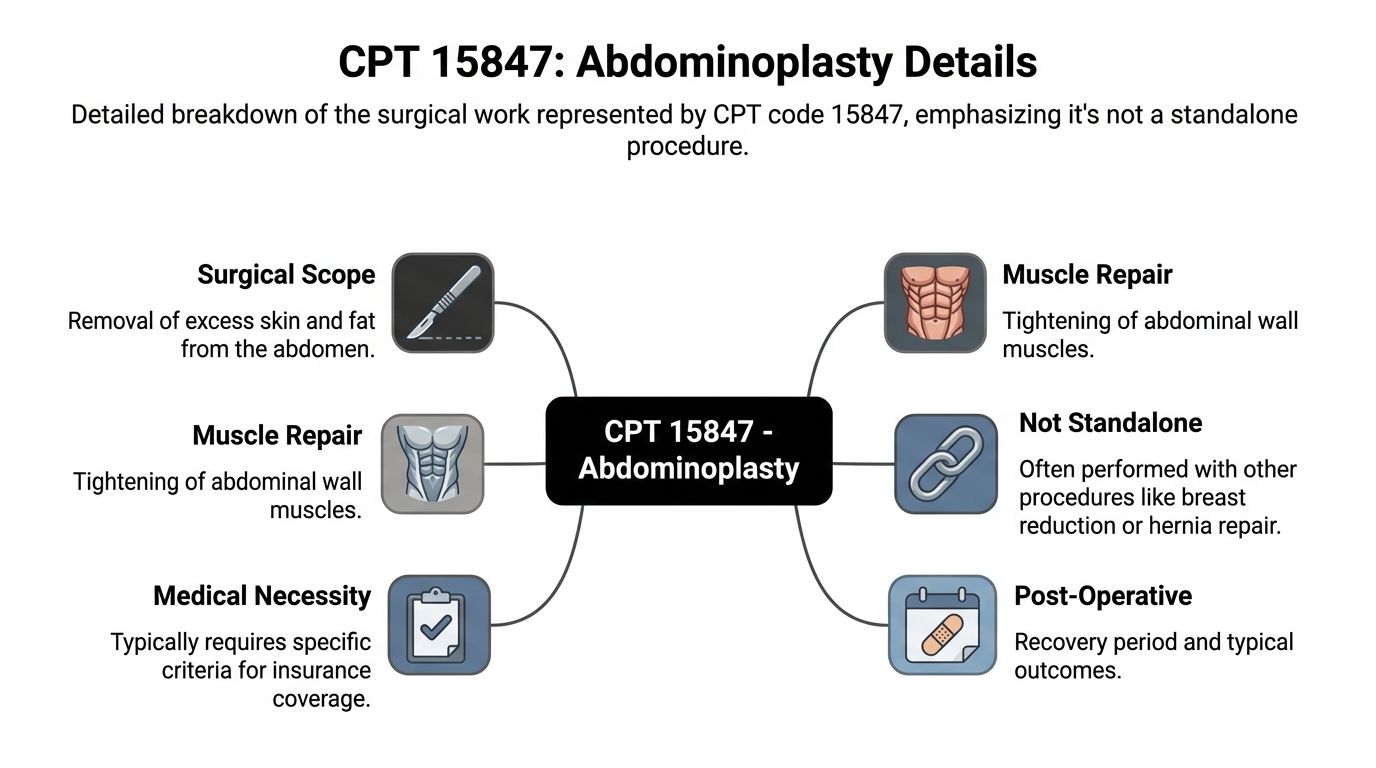
Under 15847, the operative work goes beyond removing a hanging fold of tissue. The code describes an abdominoplasty service that includes abdominal skin and subcutaneous tissue excision, umbilical transposition, and fascial plication. Those details matter because they explain why payers usually view this as body contouring rather than simple functional tissue removal.
From a documentation standpoint, the operative note has to show those elements clearly. If the surgeon only removes excess lower abdominal tissue, the claim may fit a different code set. If the note includes abdominal wall tightening and repositioning of the navel, the billing picture changes fast.
This is also why patients get confused when they compare online quotes. A tummy tuck may sound like one procedure in plain language, but the code reflects specific surgical steps, not marketing terminology.
Why the add-on status matters
15847 is an add-on code. Staff should never treat it as a stand-alone entry on a fee quote or claim form. If I see it listed by itself, my first question is simple: what base procedure supports it?
That add-on status affects three parts of billing:
- Claim submission. The code must be reported with the appropriate primary service.
- Operative documentation. The note must support the added abdominal contouring work.
- Coverage review. The inclusion of fascial tightening and umbilical transposition often pushes the case toward cosmetic review.
In practice, denials happen when the chart describes symptoms such as rashes or heaviness, but the procedure performed includes aesthetic components associated with a full abdominoplasty. Payers do not ignore those details. They use them to separate functional excision from contouring.
What patients and staff should verify on a quote
Before surgery is scheduled, the billing discussion should be specific. “Tummy tuck” is not specific enough for insurance or for an accurate self-pay estimate.
| Billing question | Why it matters |
|---|---|
| Is 15847 listed as an add-on code? | It should be attached to a primary procedure, not reported alone. |
| Does the operative plan include fascial plication? | Tightening the abdominal fascia supports the abdominoplasty description. |
| Will the umbilicus be transposed? | Belly button repositioning is part of what distinguishes this code. |
| Is the goal functional relief, contouring, or both? | That distinction often drives denial risk and out-of-pocket cost. |
One practical point is easy to miss. Patients researching labiaplasty sometimes land on 15847 because they search broad terms like “excess tissue removal” or “cosmetic excision code.” That shortcut creates bad expectations. 15847 CPT code is tied to abdominal anatomy and abdominal operative steps. It does not describe vulvar tissue reduction, and it should not appear on a labiaplasty estimate or claim.
Functional vs Cosmetic The CPT 15847 vs 15830 Distinction
Patients often assume that any surgery removing excess lower abdominal tissue should bill the same way. That assumption causes many of the denials I see. In coding, the difference between a functional panniculectomy and an abdominoplasty is not semantic. It changes coverage, preauthorization strategy, and the patient's financial risk.
The side-by-side difference
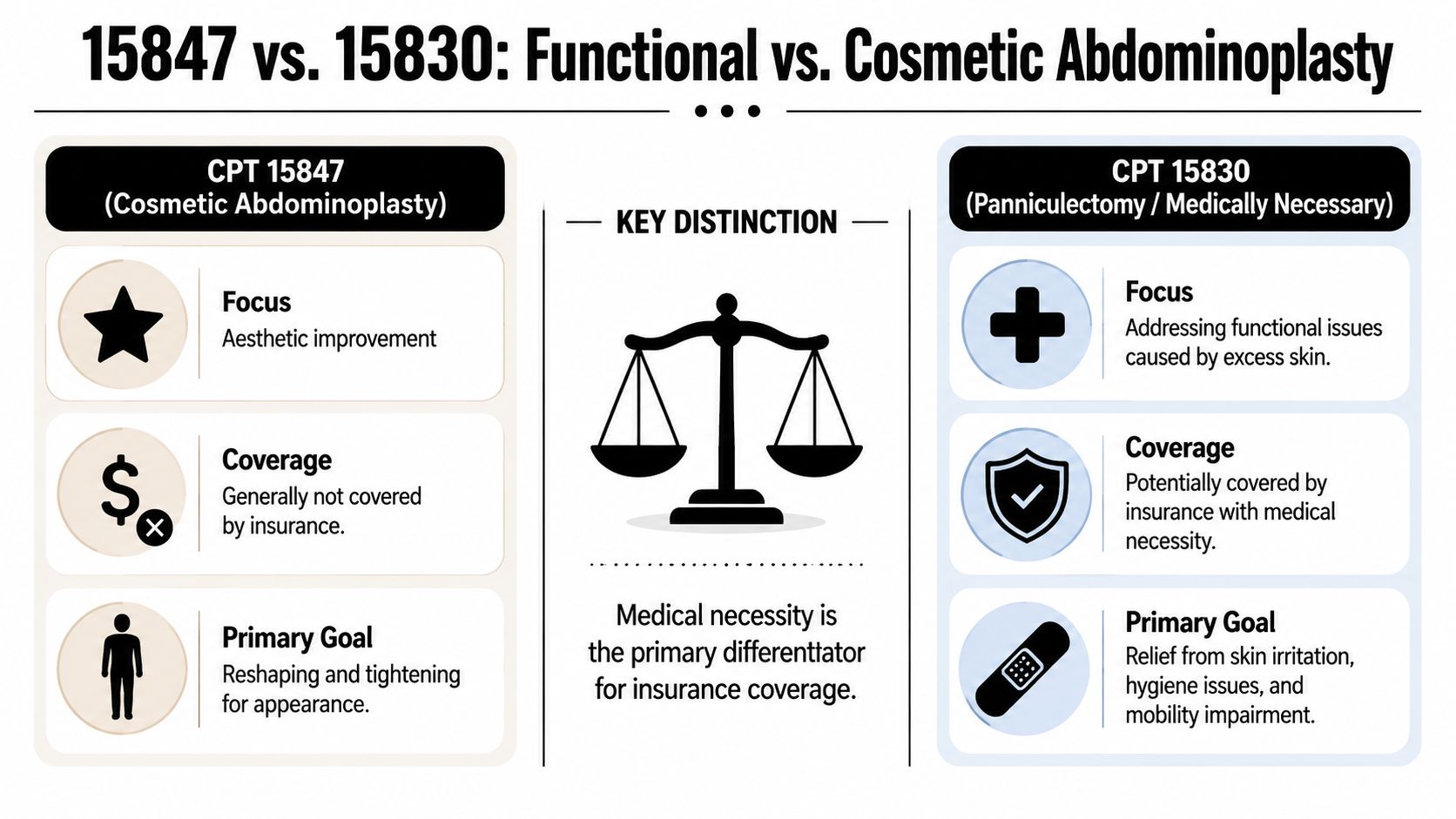
| Code | Procedure type | How insurers usually view it |
|---|---|---|
| 15847 | Abdominoplasty add-on with fascial plication and umbilical transposition | Cosmetic, typically non-covered |
| 15830 | Infraumbilical panniculectomy | May be covered when medical necessity is well documented |
The key distinction is the operative intent. 15830 supports removal of a hanging pannus when the record shows a functional problem such as chronic intertrigo, hygiene difficulty, or interference with daily activity. 15847 describes added contouring work that goes beyond simple tissue removal. Once the procedure includes abdominal wall tightening and belly button repositioning, payers usually classify the case as cosmetic.
When 15830 has a coverage path
Coverage for 15830 depends less on the patient's frustration and more on what the chart proves. Payers usually want documentation of persistent skin irritation or infection, failed conservative treatment, and photographs or exam findings showing the pannus creates a real functional burden. Many plans also want evidence that weight has been stable before surgery.
That documentation can support a panniculectomy claim. It does not convert a tummy tuck into a covered benefit.
I tell offices to be careful with scheduling language. If the consent says “tummy tuck,” the quote says “skin removal,” and the operative note later includes contouring details, the claim becomes harder to defend.
Why 15847 gets denied
15847 gets denied because the code itself points to cosmetic abdominoplasty work. Fascial plication and umbilical transposition are not incidental details. They are part of why the procedure is coded differently from 15830.
That distinction matters for patients who are also researching genital surgery. People sometimes search broadly for “excess tissue removal” and end up comparing the wrong procedures. A labiaplasty procedure overview involves different anatomy, different coding logic, and a different insurance discussion than abdominal pannus excision or abdominoplasty.
Later payer guidance makes the same practical point. 15830 can have a medical-necessity argument when the record supports function. 15847 usually does not, as outlined in Georgia Plastic's review of panniculectomy versus abdominoplasty coding.
Here's a useful explainer on the topic:
What works and what doesn't in appeals
What works:
- Documenting symptoms under the correct code family: Chronic rash, skin breakdown, hygiene impairment, and activity limits support the panniculectomy review, not the abdominoplasty code.
- Separating covered and non-covered services clearly: If both functional excision and cosmetic contouring are planned, the estimate, consent, and claim need to reflect that split.
- Matching the operative note to the actual procedure: Coders and payers look for specifics. Vague wording creates avoidable denials.
What doesn't work:
- Recasting abdominoplasty as panniculectomy after surgery
- Billing 15847 as though it independently establishes medical necessity
- Using broad phrases like “skin removal” without identifying the abdominal steps performed
Payers do not reimburse based on whether a surgery seems worthwhile. They reimburse based on the code definition, the anatomy treated, and the documentation supporting the claim.
Clearing the Air Why 15847 Is Not a Labiaplasty Code
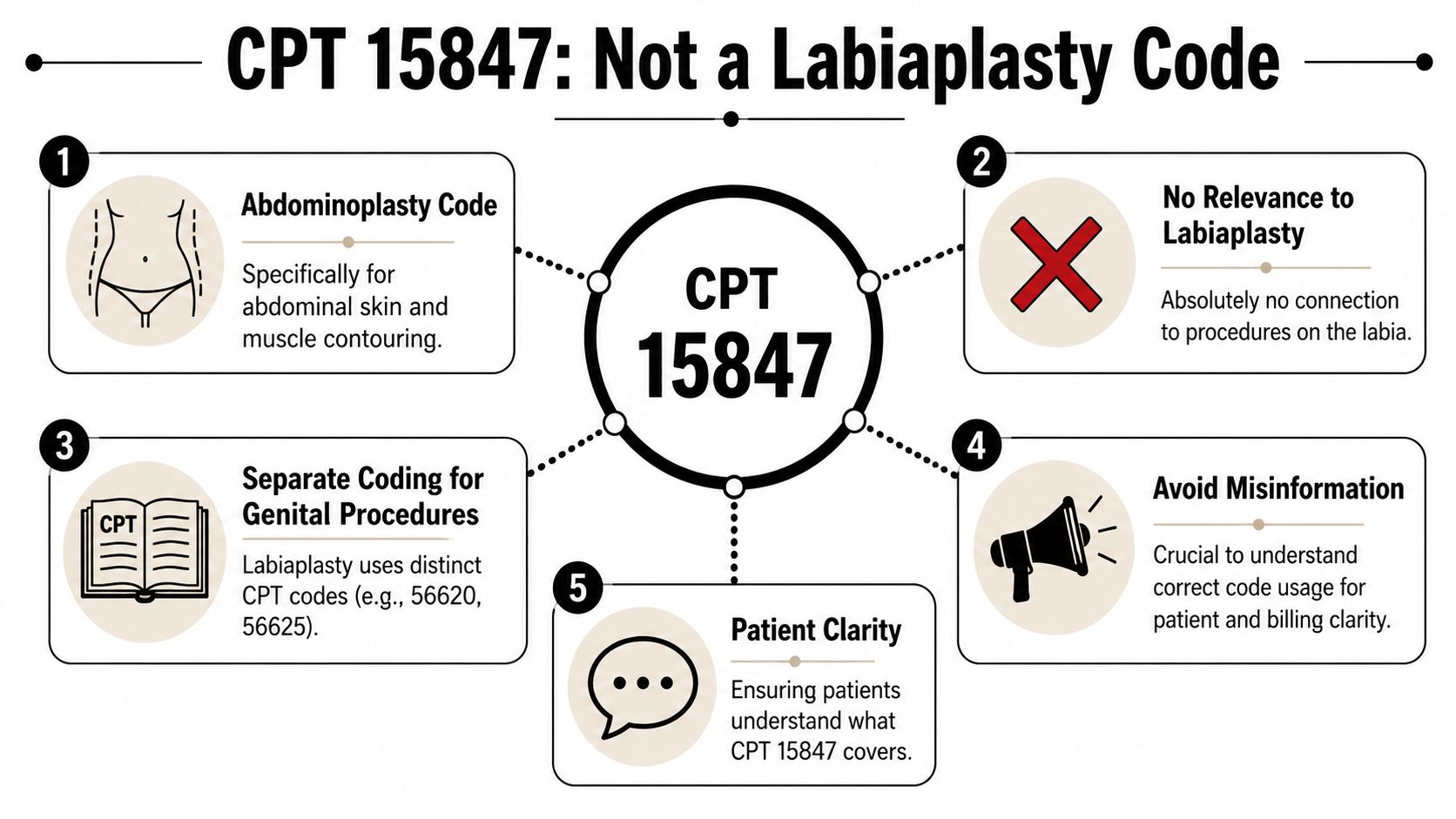
A lot of online code confusion starts with a bad shortcut. People see “skin excision” and assume one cosmetic code can stretch across unrelated anatomy. CPT does not work that way, and 15847 is not a labiaplasty code.
It is an abdominal procedure code tied to abdominoplasty work. If the surgery involves the labia or vulva, the coding discussion belongs in a different part of the CPT book. That distinction matters because payers review the claim against the body area treated, the operative note, and the diagnosis submitted.
The myth and the real coding problem
The common mistake is simple. A patient or office staff member finds 15847 during cosmetic surgery research and assumes it might apply to any procedure that removes excess tissue.
That assumption creates billing trouble fast. Verified guidance from U Control Billing's explanation of labiaplasty CPT coding states that this confusion leads to 30-40% higher insurance denial rates for female genital procedures when abdominal and genital coding are mixed, and it also skews cost expectations by blending typical abdominoplasty pricing of $8,000-$15,000 with labiaplasty pricing of $3,000-$8,000.
I see this play out in consultations. The patient comes in expecting one price range and one coverage story, but the paperwork they found online was built around the wrong anatomy from the start.
Which codes belong in the labiaplasty discussion
Labiaplasty uses a different coding framework. Depending on the operative details, offices may discuss codes such as:
- 56620
- 15839
- 58899 for unlisted scenarios
Those are the codes that belong in a genital procedure review. 15847 does not. If a patient wants background on the procedure before getting into coding, this overview of what a labiaplasty is gives the right clinical starting point.
Why this mix-up causes denials
Payers do not correct anatomy errors for the practice. If a genital procedure is submitted with an abdominal contouring code, the claim can be denied for mismatch, pushed into manual review, or priced against the wrong service category.
The financial side gets messy too. A patient may compare a labiaplasty quote to tummy tuck pricing and conclude the office is overcharging, when the problem is that two different procedures were mixed together under the wrong code discussion.
If a quote or claim for genital surgery includes CPT 15847, ask the office to explain why an abdominal code appears in the file.
A simple way to catch the error
Start with the body part named by the code.
- Abdomen: 15847 may be relevant.
- Labia or vulva: 15847 should not appear.
- Combined paperwork or unclear estimates: Ask for a code-by-code explanation tied to each procedure performed.
That one check prevents a surprising number of billing mistakes.
Navigating Costs and Insurance for Your Procedure
The number that causes the most confusion here is not the surgeon's quote. It is the small reimbursement figure patients find online and mistake for the price of surgery.

What the numbers mean
CPT 15847 may appear on fee schedule references with a relatively modest facility reimbursement amount. That figure does not represent the full cost of an abdominoplasty, and it does not mean a payer is likely to cover the case. In real billing work, this code is commonly tied to a cosmetic tummy tuck, so patients should expect self-pay responsibility unless the office is billing a separate, supportable functional service.
That gap is where a lot of frustration starts. A payer rate is only one narrow payment benchmark. It does not include the surgeon's professional fee, anesthesia, facility overhead, garments, routine follow-up, or the pricing decisions built into a cosmetic surgery package.
For patients comparing procedures, context matters. A tummy tuck quote and a genital procedure quote should not look the same because they are not built from the same code family, anatomy, or operative work. If you are trying to compare broader self-pay planning for body contouring procedures, this overview of skin removal surgery cost gives a useful budgeting framework.
What to get in writing before you schedule
I tell patients to slow the process down and ask for the estimate line by line. Offices bundle cosmetic cases in different ways, and a single total can hide important differences.
Confirm these points before paying a deposit:
- Surgeon fee: Ask whether the professional fee is separate or included in the package.
- Facility fee: Confirm the surgery location and whether the quote includes operating room costs.
- Anesthesia fee: Verify whether anesthesia is billed by time, by case rate, or folded into the package.
- Code detail: If 15847 appears, ask what procedure it is attached to and whether any other CPT code is being submitted separately.
- Post-op items: Clarify whether garments, pathology, medications, or follow-up visits create extra charges.
- Revision policy: Ask what the office considers a covered touch-up versus a new billable service.
One practical warning. If someone researching labiaplasty sees 15847 on an estimate, that is a signal to stop and ask questions before proceeding.
How insurance usually handles this code
Insurance denials under 15847 are usually not random. The payer is often treating the service as cosmetic, which is consistent with how this code is used in many abdominoplasty claims.
The better strategy is documentation discipline before surgery:
- Get the full CPT list in writing.
- Ask whether the office believes any portion is medically necessary.
- If they do, ask which diagnosis and which CPT code support that position.
- Request preauthorization only for the portion the office believes has a coverage basis.
- Review the expected patient responsibility before the date of service.
That process does not turn a cosmetic abdominoplasty into a covered benefit. It does prevent the more common billing problem, which is a patient agreeing to surgery without understanding what insurance is likely to deny.
Patient FAQs on Billing Codes and Consultations
My tummy tuck was denied under 15847. Can I appeal?
You can ask the office to review the claim, but patients should understand the basic problem first. If the surgery was accurately coded as 15847, the denial usually reflects the payer's cosmetic classification rather than a simple clerical error. In practice, the more realistic next steps are discussing payment options, confirming whether any separate functional procedure was billed, and making sure the financial consent matches what was performed.
If I'm researching labiaplasty, should I expect to see 15847 anywhere on my quote?
No. If the procedure performed is labiaplasty or another vulvar procedure, 15847 should not be the code guiding that discussion. A genital surgery quote should reflect the coding family appropriate to genital surgery, and if it doesn't, ask the office to explain the anatomy and procedure attached to each line item.
How do I avoid surprise bills before cosmetic surgery?
Use a checklist. It's the fastest way to catch sloppy quoting and mixed coding.
- Ask for the procedure name in plain English: Don't rely on code numbers alone.
- Request every planned CPT code in writing: A verbal summary isn't enough.
- Confirm what insurance was told: Ask whether the office submitted anything as medically necessary or purely cosmetic.
- Review package terms carefully: Cosmetic bundles vary from office to office.
- Bring a consultation checklist: These questions to ask a cosmetic surgeon can help you cover billing, recovery, and revision policies.
A clean consultation isn't just about choosing a surgeon. It's about making sure the surgical plan, the quote, and the billing language all describe the same procedure.
What should clinic staff double-check when patients ask about 15847?
Staff should verify four things before answering coverage questions:
| Staff checkpoint | Why it matters |
|---|---|
| Procedure anatomy | Confirms the code matches the body area |
| Add-on status | Prevents reporting 15847 as standalone |
| Primary procedure | Clarifies what service 15847 is attached to |
| Cosmetic disclosure | Sets realistic payment expectations |
That process cuts down on the two most common front-desk mistakes: quoting from memory and using “tummy tuck,” “skin removal,” and “reconstruction” as if they mean the same thing.
What's the best patient mindset when reviewing a surgery quote?
Treat the quote like a consent document, not a sales sheet. If you don't understand a code, ask what body area it refers to, what work it includes, whether insurance is expected to deny it, and what your total responsibility may be if that denial happens.
The patients who avoid billing disasters usually aren't billing experts. They just ask specific questions early.
If you're researching labiaplasty and want clear, patient-friendly guidance on procedure details, costs, recovery, and how to prepare for a surgeon consultation, visit Labiaplasty.com. It's a practical starting point for understanding the actual billing and decision-making context before you commit to surgery.
