
A sudden stab of pain low in the pelvis can make anyone think the same thing. Is this my uterus, and is something seriously wrong?
That reaction is understandable, but the body doesn't organize pain as neatly as anatomy charts do. What feels like sharp pain in the uterus area may come from the uterus, ovaries, bladder, bowel, pelvic floor muscles, or even nearby nerves. The first job is not to guess perfectly. It's to recognize when the pain needs urgent care, and when it needs a careful, non-panic evaluation.
Decoding Pelvic Pain and Emergency Red Flags
A patient may point to the center of the lower abdomen and say, “It feels like my uterus.” That description is common, but the pain source is often less obvious. Pain in the uterine area can start in the reproductive organs, or it can come from the bladder, bowel, pelvic floor muscles, abdominal wall, or nearby nerves. Clinicians sort this symptom under pelvic pain, then ask a more useful question. Is this a sudden problem that needs urgent care, or a pattern that needs careful outpatient evaluation?
Acute pelvic pain means pain that starts suddenly or changes quickly. Chronic pelvic pain means pain that persists or keeps returning over time. That distinction matters because a brief sharp pain that resolves is approached differently from pain that is escalating over hours, or pain that has been cycling for months.
The first safety check is simple. Look for red flags, not just location.
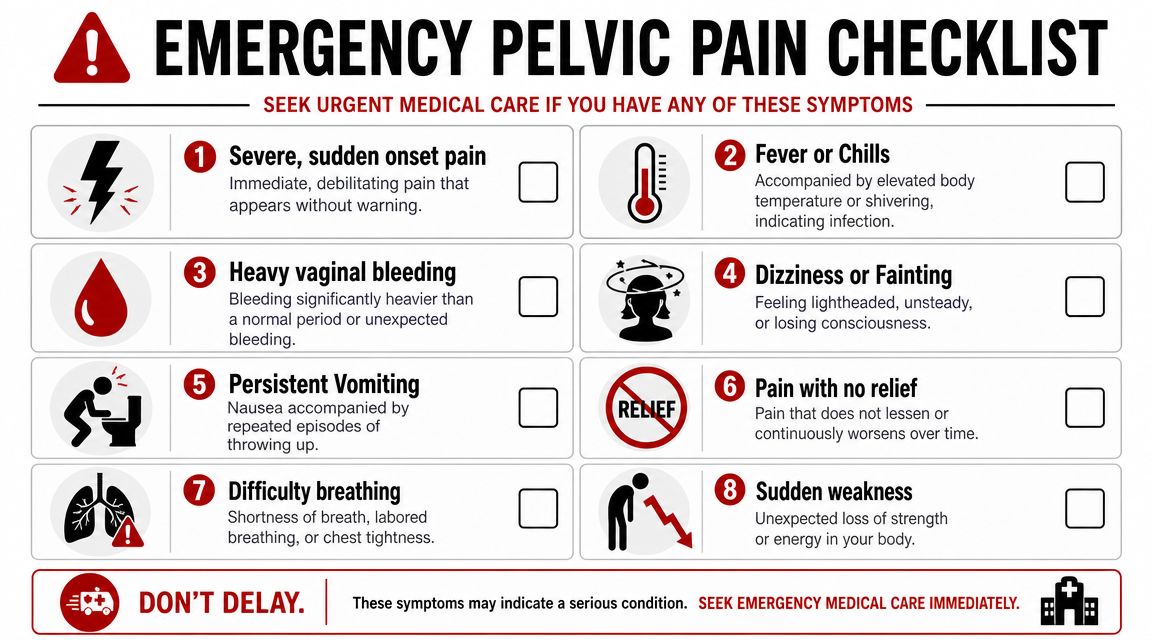
Signs that should move you toward urgent care
- Sudden severe pain that starts abruptly and does not ease
- Heavy vaginal bleeding
- Fever or repeated vomiting
- Dizziness, fainting, or unusual weakness
- Pain during pregnancy or possible pregnancy
- Pain that is clearly getting worse
- New one-sided pelvic pain, especially if it is intense
- Pelvic pain with trouble urinating, blood in the urine, or severe bowel symptoms
Practical rule: Seek prompt medical care when pelvic pain is severe, new, worsening, or paired with bleeding, fever, fainting, vomiting, or possible pregnancy.
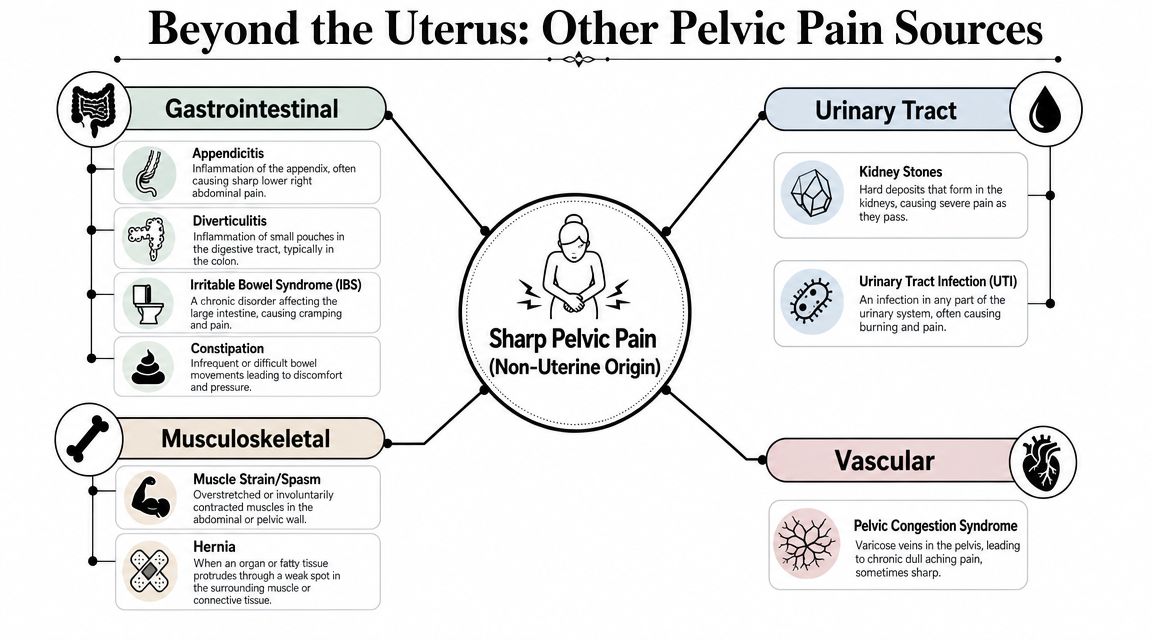
The body does not label pain by organ. A bladder infection can feel like pressure low in the pelvis. A kidney stone can radiate downward and be mistaken for uterine pain. Constipation, appendicitis, diverticular disease, or a strained pelvic floor muscle can also create sharp pain in the same region. Johns Hopkins Medicine lists gynecologic, urinary, gastrointestinal, and musculoskeletal causes among the possibilities in its overview of acute pelvic pain.
In practice, I tell patients to pay attention to the full pattern. Bleeding, discharge, missed period, urinary burning, urgency, diarrhea, constipation, pain with movement, pain with sex, and whether the pain is one-sided all help narrow the cause. Pain intensity matters, but context matters more.
Severe pain that leaves you bent over, lightheaded, or unable to keep fluids down deserves same-day assessment. Less intense pain can still need an office visit, especially if it keeps returning or is interfering with work, sleep, or daily activity.
If the discomfort is more external, burning, or focused at the vaginal entrance rather than deep in the pelvis, the problem pattern changes. This guide to pain at the vaginal opening explains that difference.
Common Gynecologic Causes of Sharp Uterine Pain
Sharp pain low in the pelvis can come from the reproductive organs, but the label “uterine pain” is often imprecise. In clinic, patients use that phrase for pain from the uterus, ovaries, fallopian tubes, cervix, or nearby pelvic structures. That is why gynecologic causes matter, but they are only part of the differential diagnosis, meaning the list of possible explanations.
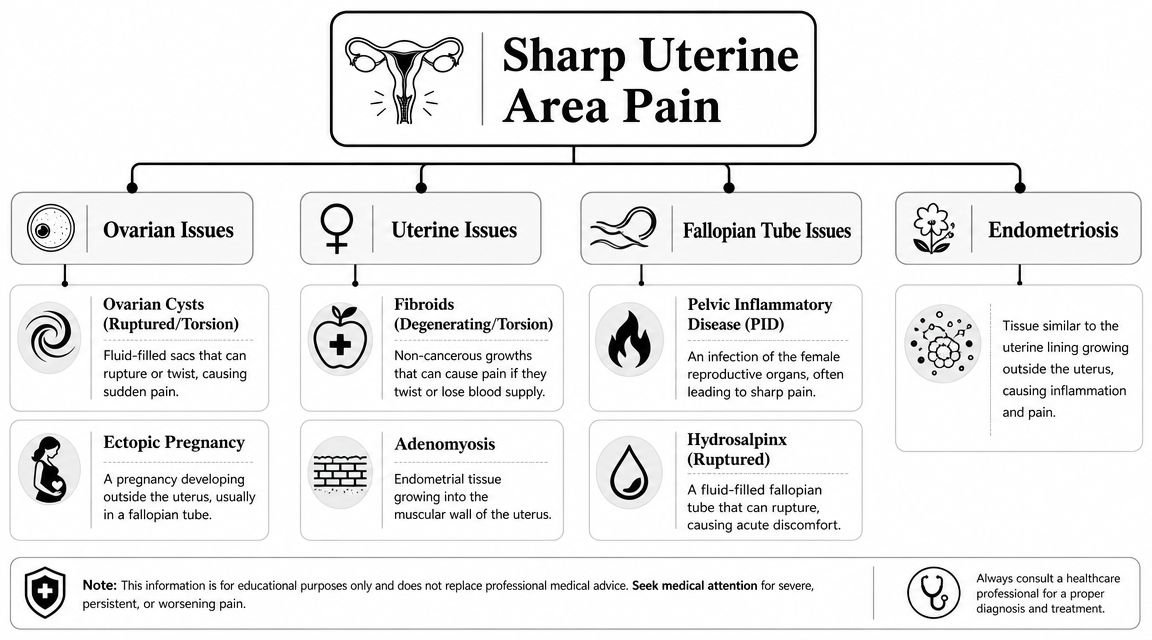
In non-pregnant patients, common acute gynecologic causes include pelvic inflammatory disease, ruptured ovarian cysts, ovarian torsion, and degeneration or torsion of uterine fibroids. Ultrasound is often the first imaging test because it can identify many pelvic problems without exposing the patient to ionizing radiation, as described in this peer-reviewed review of acute gynecological pelvic pain.
Ovarian causes
Ovarian cysts are common, and many cause no symptoms at all. Trouble starts when a cyst ruptures, bleeds, or stretches the ovary enough to trigger sudden pain. The pain is often one-sided and can start abruptly, sometimes during exercise, sex, or no clear trigger at all.
Ovarian torsion is different. Torsion means the ovary twists on the tissues that carry its blood supply. That usually causes more intense, more persistent pain, often with nausea or vomiting. Patients may point to the middle of the lower abdomen and say “my uterus hurts,” even though the ovary is the source.
Uterine causes
Fibroids are benign growths of the uterine muscle. Many fibroids cause heavy periods, pelvic pressure, urinary frequency, or no symptoms. A fibroid can become sharply painful if it outgrows its blood supply, called degeneration, or if a fibroid on a stalk twists. That pattern is less common than pressure or cramping, but it is a real reason for acute pain.
Adenomyosis means uterine lining tissue grows into the muscular wall of the uterus. It tends to cause deep menstrual cramping, heavy bleeding, and a tender, enlarged uterus rather than a single dramatic pain episode. Still, some patients describe brief stabbing flares on top of chronic cramping, especially around their period.
Infection and inflammatory causes
Pelvic inflammatory disease, or PID, is infection and inflammation involving the uterus, fallopian tubes, or ovaries. Pain may be sharp, dull, or diffuse, which is one reason self-diagnosis is unreliable. Clues that raise concern include abnormal discharge, fever, bleeding after sex, pain with sex, or pain that keeps building over a day or two instead of easing.
Endometriosis can also create pain that feels centered in the uterus even when the uterus is not the only organ involved. Endometrial-like tissue grows outside the uterus and irritates nearby structures. The pattern is often cyclical or recurrent rather than a single isolated attack, but flares can feel sharp and localized.
Pain location alone has limits.
Inflammation can spread pain across the pelvis, and the brain does not map each organ with precision. A patient may feel certain the uterus is involved when the pain is coming from an ovary or tube, or when a gynecologic problem is only part of the picture. That is one of the trade-offs in pelvic pain evaluation. Symptoms can point us in the right direction, but they rarely identify the exact organ with confidence.
A practical rule is this: if sharp pelvic pain keeps recurring, becomes one-sided, is tied to sex or menstruation, or comes with bleeding, discharge, or fever, it deserves a gynecologic assessment. If the exam and ultrasound do not show a clear gynecologic cause, the next step is to broaden the workup rather than keep assuming the uterus is to blame.
Understanding Pain During Pregnancy
Pregnancy changes the meaning of pelvic pain. The threshold for calling a clinician should be lower, because some serious causes are time-sensitive and can't be sorted out safely at home.
One important reason is ectopic pregnancy, which is a pregnancy developing outside the uterus, usually in a fallopian tube. MSD Manual identifies ruptured ectopic pregnancy as one of the “most dangerous causes” of pelvic pain, alongside appendicitis and a twisted ovary, in its overview of pelvic pain in women. If pregnancy is possible and the pain is sudden, severe, or paired with bleeding or faintness, that's urgent.
Pain that can be benign
Not every sharp sensation in pregnancy means disaster. Ligaments stretch, the uterus grows, and bowel function changes. Some people feel brief pulling pains with movement, coughing, or turning in bed. Those are often less concerning if they are short, positional, and not associated with bleeding, fever, faintness, or persistent worsening.
What helps in real life is pattern recognition. Pain that comes and goes with movement is different from pain that keeps intensifying while you're resting still.
Pain that should never be brushed off
Call promptly if you have any of the following:
- Sharp pain with vaginal bleeding
- Pain plus dizziness or fainting
- Pain that is severe or one-sided
- Pain with vomiting or fever
- Pain that persists instead of easing
Pregnancy is not a time for self-diagnosis by internet checklist. The same symptom can reflect something relatively common or something dangerous. A phone call to your obstetric team is usually the right first move, and emergency evaluation is appropriate when the pain is intense or paired with red flags.
When the Pain Is Not From the Uterus
This is the part many people miss. The pelvis is crowded. Organs share space, muscles overlap, and nerves send signals that blur together. So the phrase sharp pain in the uterus area is often a location description, not a diagnosis.
Johns Hopkins specifically lists direct nerve irritation, muscle cramps or spasm, IBS, urinary infection, and appendicitis among common causes of pelvic pain in its pelvic pain overview.
Bladder and urinary tract
A urinary tract infection can create pressure, burning, pelvic discomfort, and a surprisingly sharp ache low in the pelvis. If the bladder is irritated, people often point to the center of the lower abdomen and assume the uterus is the source.
Kidney stone pain can also radiate downward into the pelvis. That pain often feels sharper, more restless, and harder to get comfortable with than typical menstrual cramping.
Bowel and digestive causes
The bowel is a frequent impersonator. IBS, constipation, gas, and appendicitis can all be felt in the lower pelvis. Patients often say, “It feels gynecologic,” until bowel symptoms or a scan tells a different story.
One reason is nerve crosstalk. Nearby structures share sensory pathways, so the brain maps the discomfort to a familiar central area.
This short video gives a useful overview of pelvic pain patterns beyond one organ:
Muscles, fascia, and nerves
Pelvic floor muscle spasm can create stabbing, aching, or pulling pain that feels deep and internal. So can an abdominal wall strain or a hernia. These problems often worsen with movement, lifting, prolonged sitting, or certain positions.
A nerve-related pain pattern can be even more confusing. It may burn, zap, or feel sharply localized, yet imaging of the uterus and ovaries may be normal.
Clinical reality: A normal ultrasound doesn't mean the pain isn't real. It may mean the source is muscular, bladder-related, bowel-related, or neuropathic rather than uterine.
If friction, irritation, or local vulvar discomfort is part of the picture, it helps to separate surface symptoms from deep pelvic pain. This guide on chafing of the labia can help people sort out whether they're dealing with external irritation rather than internal pelvic pathology.
How Doctors Diagnose and Treat Pelvic Pain
A pelvic pain visit usually starts with a sorting problem. The pain may feel centered over the uterus, but the source can come from the ovaries, bladder, bowel, pelvic floor muscles, abdominal wall, or nearby nerves. Good evaluation starts by locating the pain pattern, checking for urgent risk, and deciding which tests will change management.
Doctors and advanced practice clinicians usually begin with a history, a focused exam, pregnancy testing when relevant, urine testing, and selected imaging. The goal is practical. Identify emergencies first, then narrow the likely source without assuming every pain in the middle of the pelvis is gynecologic. The NIH's overview of chronic pelvic pain reflects that same broad approach.
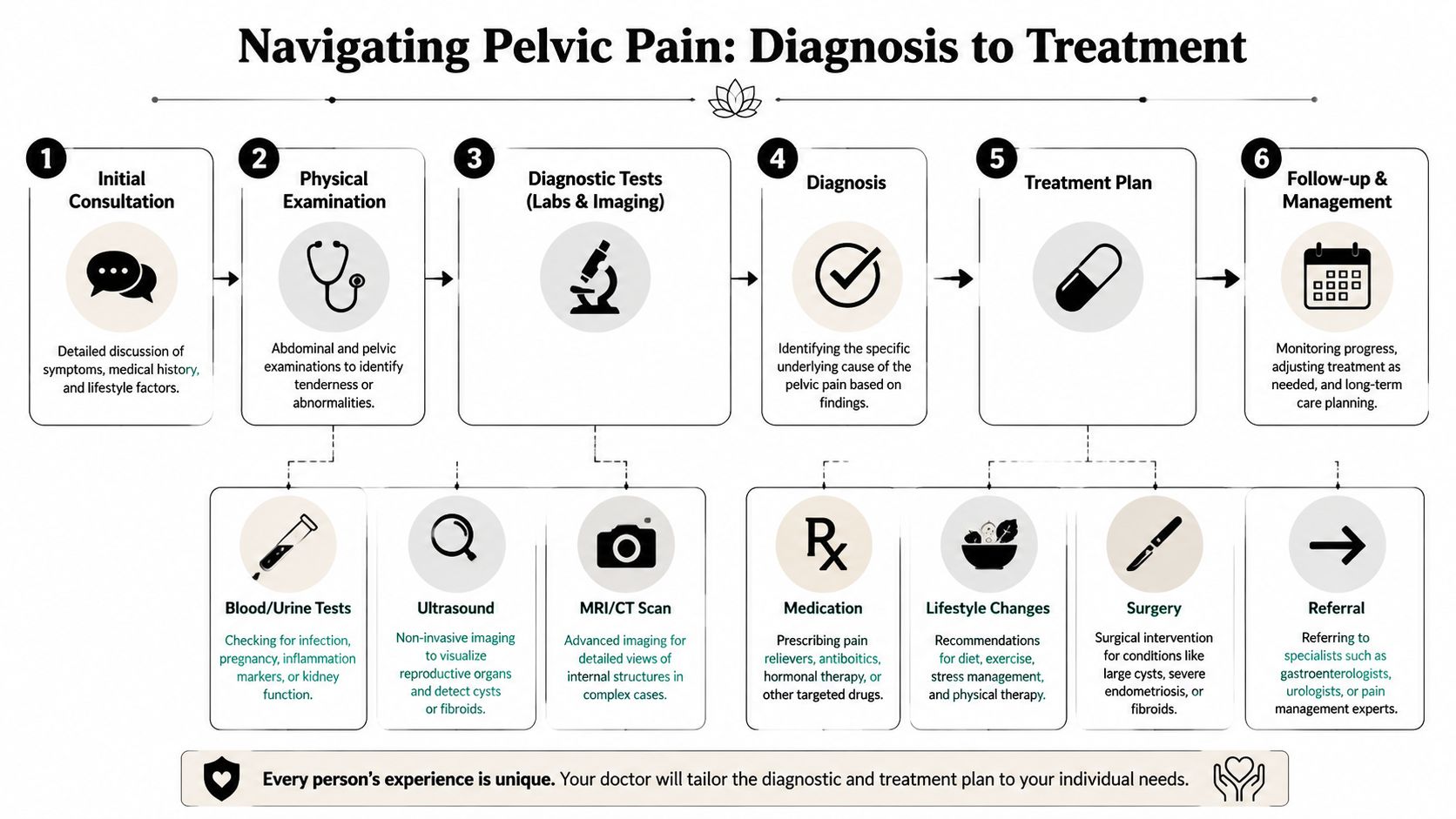
What the clinician wants to know
The history often gives the first strong clue. I want to know:
- When the pain started
- Whether it is constant, comes in waves, or is tied to the menstrual cycle
- Whether it is one-sided, midline, or triggered by movement, urination, sex, or bowel movements
- Whether there is bleeding, discharge, fever, nausea, urinary burning, urinary frequency, constipation, or diarrhea
- Whether pregnancy is possible
- Whether there is a history of cysts, fibroids, endometriosis, IBS, kidney stones, bladder pain, or prior pelvic surgery
Those details matter because they change the differential diagnosis, meaning the list of possible causes. Burning with urination points the workup in a different direction than pain that worsens during a bowel movement. Pain that spikes with sitting or lifting raises a different concern than pain linked to ovulation or bleeding.
What tests are actually for
Each test answers a specific question.
A pregnancy test helps rule in or rule out causes that need urgent attention. A urinalysis checks for infection, blood, and other urinary clues. Blood work may be used if there is concern for infection, significant bleeding, inflammation, or pregnancy-related complications.
A pelvic exam looks for cervical motion tenderness, masses, pelvic floor muscle spasm, vaginal or vulvar causes, and signs of infection. A transvaginal ultrasound is often the first imaging test when a gynecologic cause is high on the list because it can show ovarian cysts, fibroids, or other pelvic findings. If the history sounds more urinary, gastrointestinal, or musculoskeletal, the clinician may order different imaging or refer to another specialist instead of repeating gynecologic testing that has already been normal.
That trade-off matters. More testing is not always better testing.
How treatment is chosen
Treatment follows the suspected cause, the severity of symptoms, and whether there are warning signs.
| Problem pattern | Common treatment direction |
|---|---|
| Infection-related pain | Antibiotics, symptom control, and follow-up |
| Cyst or fibroid-related pain | Observation, pain relief, repeat imaging, or a procedure depending on size, symptoms, and concern for complications |
| Hormone-linked pain patterns | Hormonal treatment in selected cases, especially if symptoms track with the cycle |
| Muscle or pelvic floor pain | Pelvic floor physical therapy, movement-based treatment, and targeted pain management |
| Non-gynecologic source | Referral to urology, gastroenterology, pain medicine, or another specialist |
Pain control may include NSAIDs, meaning anti-inflammatory medicines such as ibuprofen, if they are safe for you to take. Some patients need treatment aimed at bladder irritation, constipation, pelvic floor spasm, or nerve pain rather than the uterus itself. If surgery is part of the picture, careful care for surgical incisions after pelvic-area procedures also helps distinguish expected surface healing pain from a new internal problem.
The biggest mistake is assuming all central pelvic pain is “uterine pain.” That shortcut often delays the right diagnosis. When symptoms do not match the uterus, clinicians need to widen the workup instead of forcing the story into a gynecologic category.
Post-Surgery Pain and Your Next Steps
People recovering from vulvar or pelvic-area procedures often become hyper-aware of any lower pelvic sensation. That's normal. Surgery changes how you notice swelling, pressure, tightness, and tenderness, and during recovery it's easy to interpret every new sensation as something internal.
What expected healing pain usually feels like
After surgery near the vulva, expected discomfort is usually tied to the incision area and surrounding tissues. It may feel sore, swollen, tender, bruised, or tight. It often changes with sitting, walking, or the end of the day.
That's different from a new, deep internal pain that feels higher in the pelvis or more like a sudden stab inside the abdomen. Postoperative patients sometimes lump both together, but they aren't the same category.
A few practical signs usually point toward ordinary healing:
- The discomfort improves gradually
- It matches the surgical site
- Swelling and tenderness remain local
- Rest and prescribed aftercare help
What should make you call your surgeon
Call your surgeon or seek medical care if the pain becomes sharper, more intense, or more widespread instead of trending better. The same is true if pain is paired with fever, heavy bleeding, drainage that concerns you, worsening redness, or pain that seems deeper than the operative site.
For anyone who recently had surgery, one of the biggest mistakes is assuming every symptom is “just recovery.” Another common mistake is the opposite, assuming every normal twinge means something went wrong. The useful question is whether the pain fits the expected healing pattern or has clearly broken from it.
Healing pain tends to be local and gradually less dramatic. Concerning pain tends to escalate, spread, or come with other warning signs.
When post-surgical pain may not be from the surgery
This is especially important. A person can be recovering from a procedure and still develop a UTI, constipation, pelvic floor spasm, ovarian cyst pain, or appendicitis. Recovery doesn't protect you from unrelated causes of pelvic pain.
That's why context matters. If the pain is linked to urination, bowel movements, one-sided pelvic tenderness, vomiting, or dizziness, the problem may not be the incision at all. If you're in doubt, contact your surgeon's office first. They can often tell you whether your symptoms sound like a routine postoperative issue or something that needs urgent evaluation elsewhere.
A practical next-step checklist
If you're deciding what to do today, use this short framework:
- Locate the pain carefully. Is it skin-level, vulvar, deep pelvic, one-sided, central, or diffuse?
- Check for red flags. Bleeding, fever, faintness, vomiting, pregnancy, or rapidly worsening pain should raise urgency.
- Notice the pattern. Is it tied to movement, urination, bowel activity, or the menstrual cycle?
- Compare it with yesterday. Better, same, or clearly worse?
- Call sooner if you recently had surgery. It's safer to ask than to guess.
If you're in the recovery phase, detailed incision care also matters because poor wound care can complicate the picture and make normal healing harder to judge. This guide on how to care for surgical incisions is a useful reference.
The most important takeaway is simple. Sharp pain in the uterus area is a symptom, not a diagnosis. Sometimes the uterus is involved. Often it isn't. The safest approach is to stop trying to name the organ first and start by judging the urgency, the associated symptoms, and whether the pattern fits bladder, bowel, muscle, nerve, pregnancy-related, or gynecologic causes.
If the pain is sudden and severe, seek urgent care. If it's persistent or recurrent, get examined. If you recently had surgery and the pattern seems off, contact your surgeon. Calm action beats self-diagnosis every time.
If you're researching labiaplasty, recovery, or how to tell normal healing from symptoms that deserve a call to your doctor, Labiaplasty.com offers practical educational guides, recovery information, and tools to help you prepare for informed conversations with qualified surgeons.
