

Deciding whether labiaplasty is right for you means carefully weighing the potential benefits against the risks. It’s a major decision. On one hand, the procedure can bring incredible relief from physical discomfort and a huge boost in confidence. On the other, it's a real surgery with costs, recovery time, and potential complications that you have to take seriously.
Understanding Labiaplasty Beyond the Basics

In simple terms, labiaplasty is a surgical procedure that changes the shape or size of the labia minora (the inner lips). While it's often talked about as a "cosmetic" procedure, the reasons women seek it out are deeply personal and usually fall into two main camps: fixing functional problems or improving aesthetics. Figuring out your primary motivation is the first step in knowing if this is the right path for you.
For many women, this is about solving real, everyday physical issues. Elongated labia can cause persistent discomfort that interferes with life. Common complaints include:
- Chafing and Irritation: Constant rubbing against clothing, especially during exercise like running or cycling, can be genuinely painful.
- Twisting and Pulling: The tissue can get caught, twisted, or pulled during physical activities or intimacy, causing sharp pain.
- Hygiene Concerns: For some, excess tissue can make maintaining personal hygiene feel more complicated.
Functional vs. Aesthetic Goals
Of course, the goal can also be purely aesthetic—driven by a desire to feel more confident and at ease with your body's appearance. This is just as valid as any functional reason. Feeling self-conscious can take a toll on intimacy, body image, and overall self-esteem.
An honest conversation with yourself is key. Are you looking for relief from physical pain, a boost in your confidence, or a mix of both? Knowing your "why" will be the foundation of your consultation with a surgeon.
The procedure has become increasingly common. The International Society of Aesthetic Plastic Surgery tracked 189,058 labiaplasties performed worldwide in 2023, which is a 14.8% jump from 2019. It’s now the 18th most common surgical procedure around the globe. You can review the full study of plastic surgery trends to see how it stacks up against other surgeries.
Key Surgical Approaches
Surgeons generally rely on one of two main techniques to reshape the labia. Each has its own pros and cons, and understanding the basics will help you have a more productive conversation with your doctor.
| Technique | Primary Goal | Key Characteristic |
|---|---|---|
| Trim Method | To reduce the length of the labia minora. | Involves a direct excision along the outer edge of the labia. |
| Wedge Resection | To reduce size while preserving the natural contour. | Removes a V-shaped wedge of tissue and stitches the remaining edges together. |
Which method is best depends entirely on your anatomy and what you hope to achieve. This is a critical discussion to have during your consultation, as the technique chosen will directly influence the final appearance, scarring, and even the potential for changes in sensation.
The Benefits: A Detailed Look at the Pros

When we talk about the advantages of labiaplasty, the conversation goes much deeper than just aesthetics. For many women, the driving force behind this decision is a genuine desire for improved daily comfort and a better quality of life.
The benefits really fall into two main categories that are closely linked: functional relief and psychological well-being. Understanding these positive outcomes is crucial when you're weighing the pros and cons of labiaplasty, as the procedure can resolve physical issues that interfere with everyday life, leading to lasting change.
A Major Boost in Physical Comfort
One of the most immediate and significant benefits is the end of physical discomfort. Elongated or asymmetrical labia can cause a whole range of painful and irritating symptoms that many women simply learn to live with, often thinking it's just the way their body is.
Labiaplasty tackles these issues head-on by trimming the excess tissue that causes constant friction, pinching, and irritation. This simple change leads to some very real, tangible improvements in day-to-day life:
- Pain-Free Exercise: Activities like running, cycling, or even a spin class can become enjoyable again, without the distraction of painful chafing and rubbing.
- Comfort in Clothing: There's a real sense of freedom in being able to wear yoga pants, fitted jeans, or a swimsuit without tissue twisting, pulling, or creating a noticeable bulge.
- Reduced Irritation: Even something as simple as sitting for long periods becomes more comfortable when that chronic, low-level irritation is finally gone.
By removing the source of the problem, the surgery allows women to lead a more active and comfortable lifestyle. This shift from constant awareness of discomfort to a feeling of physical ease is often what patients describe as the single most important "pro" of their surgery.
Enhanced Psychological Well-being and Confidence
The psychological benefits of labiaplasty are every bit as powerful as the physical ones. Feeling self-conscious about an intimate part of your body can create a ripple effect, impacting everything from relationships to overall self-esteem.
When a woman feels her labia look "abnormal" or disproportionate, it can cause real anxiety, especially during intimacy. The procedure helps alleviate these insecurities, paving the way for a much healthier and more positive body image.
The goal isn't about chasing some "perfect" look. It's about finding a sense of comfort and normalcy in your own skin. This boost in self-assurance often allows women to feel less inhibited and more present with their partners.
This newfound confidence isn't just limited to the bedroom. Many women report feeling more at ease in places like gym locker rooms or at the beach, no longer preoccupied with how they might look in certain clothes. This mental freedom is a huge part of the procedure's overall success.
High Patient Satisfaction Rates
The positive impact of labiaplasty isn't just anecdotal; it's strongly backed by patient satisfaction data. Study after study shows that the vast majority of women who have the procedure are very happy with their decision and their results.
For example, compelling research shows that 83% of patients report satisfactory results overall. Drilling down, 89% were satisfied with the cosmetic outcome and an even higher 93% were satisfied with the functional improvements. These numbers really underscore how effective the procedure is at meeting both physical and aesthetic goals.
Better yet, with only 4% of patients stating they would not do it again, the regret rate is exceptionally low. This signals a high degree of positive impact on patients' lives. You can find more details in these labiaplasty patient satisfaction statistics on panaceaplasticsurgery.com.
This high rate of satisfaction tells a clear story: for the right candidate, the benefits are tangible and truly life-enhancing.
To put it all together, here’s a quick summary of the positive outcomes patients often experience.
Summary of Potential Labiaplasty Benefits
| Benefit Category | Specific Improvement | Real-World Impact |
|---|---|---|
| Functional Relief | Reduced chafing and friction | Enjoying exercise like cycling or running without pain. |
| Functional Relief | No more twisting or pulling | Wearing fitted clothing, like leggings or swimwear, comfortably. |
| Functional Relief | Improved hygiene and less irritation | Feeling cleaner and more comfortable throughout the day. |
| Psychological Well-being | Increased self-confidence | Feeling less self-conscious in intimate situations or locker rooms. |
| Psychological Well-being | Positive body image | Moving past long-held insecurities about appearance. |
| Quality of Life | Greater sexual satisfaction | Focusing on pleasure without the distraction of physical discomfort. |
Ultimately, these high satisfaction rates reflect the procedure's ability to successfully resolve long-standing issues, leading to both physical relief and a significant emotional lift.
The Risks: A Transparent Look at the Cons
Let's be honest: every surgery, no matter how routine, has potential downsides. A balanced view of labiaplasty means taking a clear-eyed look at the risks involved. While the vast majority of women sail through recovery with great results, it's absolutely essential to understand what could go wrong before you decide.
These risks generally fall into two buckets: short-term issues that can pop up during the initial healing phase, and longer-term concerns that might only become clear after you’ve fully recovered. Knowing about them ahead of time empowers you to ask the right questions and prepare properly for your recovery.
Immediate Post-Operative Complications
The first few weeks are when your body is doing the most healing, and it's also when most complications, though rare, tend to surface. Your surgeon will give you a detailed list of aftercare instructions—following them to the letter is your best defense against these issues.
Common immediate risks include:
- Infection: Like any surgical cut, an incision is vulnerable to bacteria. Signs to watch for are worsening redness or swelling, unusual discharge, or a fever. Meticulous hygiene is key here.
- Hematoma: This is basically a pocket of blood that collects under the skin near the incision, creating a painful, swollen lump. Small ones often go away on their own, but a larger hematoma might need to be drained by your surgeon.
- Wound Separation (Dehiscence): This is when the edges of the incision come apart before they're fully healed. It’s often caused by doing too much, too soon, or not caring for the wound as instructed.
When caught early, these problems are usually managed quite effectively. This is why keeping the lines of communication open with your surgical team and showing up for all your follow-up appointments is so important.
Longer-Term Issues and Aesthetic Concerns
After the initial healing is done, other potential cons can come to light. These longer-term risks are often tied to the final cosmetic result or changes in sensation. They really highlight why choosing a board-certified surgeon with deep experience in this specific surgery is non-negotiable.
The most significant long-term risks are often subjective—they come down to whether the final result matches what the patient envisioned. This just reinforces how crucial it is to have clear, honest conversations and set realistic goals from the very beginning.
Potential long-term concerns include:
- Unfavorable Scarring: While surgeons are skilled at hiding incisions, sometimes scar tissue can be more obvious than you’d like. It might look thick, raised, or have a different color than the surrounding skin.
- Altered Sensation: It's possible to have changes in sensitivity. Some women report temporary numbness, while a few feel hypersensitivity. In very rare instances, these changes can be permanent.
- Asymmetry: Perfect symmetry is the goal, but it can be elusive. Minor differences between the left and right sides might remain or even become noticeable after the swelling goes down.
- Over-resection: This is one of the more serious complications, where too much labial tissue is removed. It's not something that can be easily fixed and can lead to problems like chronic dryness, pain at the vaginal opening, and an unnatural, "scalloped" look.
- Need for Revision Surgery: If a patient is unhappy with the cosmetic outcome or runs into a complication like major scarring or asymmetry, a second surgery may be needed to correct it. This, of course, means more cost, more recovery time, and more healing.
The Financial and Emotional Costs
Beyond the physical risks, the "cons" of labiaplasty also include the very real financial and emotional investment. Because it’s almost always considered a cosmetic procedure, insurance won’t touch it. You’ll be paying for the surgeon’s fee, the surgical facility, and anesthesia completely out-of-pocket.
The recovery itself is another major factor. You have to plan on taking time off work and putting a pause on exercise and sexual activity for at least 4-6 weeks. This downtime isn’t just a practical challenge; it can be an emotional rollercoaster as you wait for swelling to go down and for your final look to emerge. It’s a process that truly requires patience and a good support system. Weighing these practical and emotional realities is a huge part of figuring out if this procedure is truly right for you.
Comparing Surgical Techniques: Trim vs. Wedge
When you’re weighing the pros and cons of labiaplasty, you have to look closely at the surgical technique itself. The method your surgeon uses is one of the biggest factors in your final outcome.
The two most common approaches are the trim (or edge) technique and the wedge resection. They aren't just different ways to do the same thing; each one is designed for specific anatomical issues and aesthetic goals. This choice is a critical conversation to have with your surgeon because it directly influences scarring, the final look, and even potential changes in sensation.
The Trim Technique Explained
The trim technique, often called an edge resection, is the original and most direct method. With this approach, the surgeon makes a linear cut, simply removing the excess outer edge of the labia minora. It's a very effective way to significantly shorten labia that are particularly long.
Because this technique removes the darker, often ruffled outer border, it creates a new, smoother edge. The trade-off is that the natural contour and coloration of the original labial edge are gone. For some, this can result in a less natural appearance or a scar that runs along the entire length of the labia.
The Wedge Resection Explained
In contrast, the wedge resection is all about preserving the natural edge of the labia. Instead of cutting along the entire border, the surgeon removes a V-shaped or pie-shaped "wedge" of tissue from the fullest part of the labia. The remaining top and bottom sections are then carefully sutured back together.
Many surgeons and patients prefer this technique because it keeps the original color, texture, and contour of the labial border, leading to a more discreet result. There's also a belief that since the scar isn't on the sensitive outer edge, there might be a lower risk of impacting nerve endings and sensation.
The core difference is preservation versus removal. The wedge technique takes out a piece to reduce the size but keeps the natural border intact. The trim technique removes that border completely to create a new, shorter one.
Before you get too deep into which surgical method is best, it's essential to understand the general risks involved with any surgery. The decision tree below visualizes some of the key things every patient needs to consider, like infection, scarring, and the financial side of things.
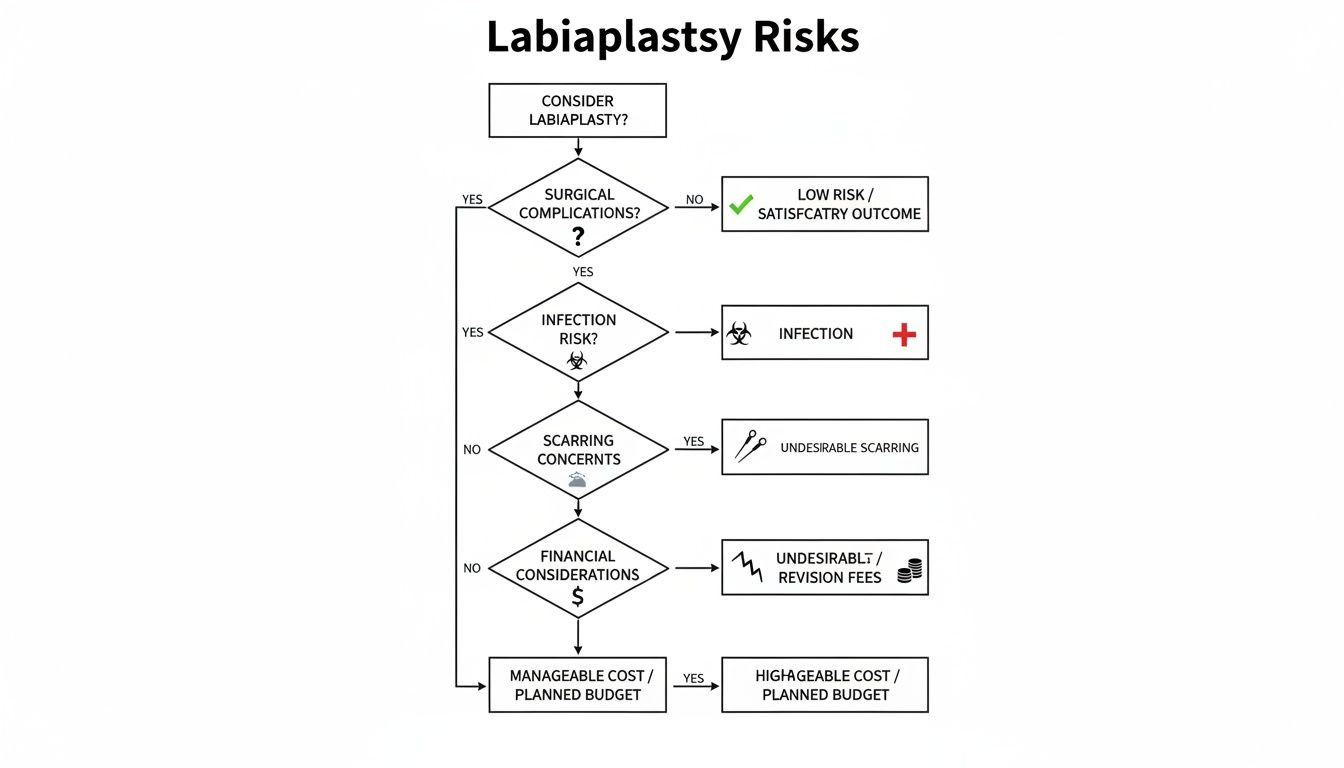
As you can see, each risk factor branches into more specific considerations. It really drives home the point that this decision is about much more than just picking a surgical style.
Head-to-Head Comparison: Trim vs. Wedge
To make the choice clearer, let’s put these two techniques side-by-side. If you want to get into even more detail about these methods and some of their variations, you can read more about the top labiaplasty techniques explained in detail on labiaplasty.com.
Comparing Labiaplasty Techniques: Trim vs. Wedge Resection
Here’s a breakdown to help you understand which approach might be a better fit for your anatomy and goals.
| Feature | Trim (Edge) Technique | Wedge Technique |
|---|---|---|
| Primary Goal | Significant reduction in labia length and projection. | Moderate reduction while preserving the natural appearance. |
| Ideal Candidate | Patients with very long labia who need a substantial amount removed. | Patients who want a size reduction but want to keep the natural labial border. |
| Scar Placement | Runs along the entire new outer edge of the labia. | A vertical or V-shaped scar, usually hidden within the labial folds. |
| Aesthetic Result | Creates a smooth, uniform edge but removes the natural contours. | Maintains the original color and texture of the labial edge. |
| Sensation Impact | Higher theoretical risk of altering sensation due to the incision location. | Lower theoretical risk, as it spares the most sensitive outer edge. |
| Complexity | Technically simpler and generally quicker to perform. | More technically demanding and requires very precise closure. |
Ultimately, there is no single "best" technique. The right choice is completely individual and depends on your unique anatomy, how much tissue needs to be removed, and what you want the final result to look like. The only way to know for sure is to have a thorough consultation with a board-certified plastic surgeon who is experienced in performing both methods.
Navigating Your Recovery Journey: What to Expect
When you're weighing the pros and cons of labiaplasty, the surgery itself is only half the picture. The recovery process is where your diligence and patience really pay off, and knowing what’s coming helps you prepare. Every patient's experience is slightly different, but the healing journey follows a fairly predictable timeline.
The single most important thing you can do for a smooth recovery is to follow your surgeon's aftercare instructions to the letter. This isn't a time to rush things; your body needs this period to heal properly so you can enjoy your final results.
The First 48 Hours: Intense Care
Those first two days are all about managing swelling and keeping comfortable. You're going to see significant swelling and probably some bruising—that's completely normal and expected. Your only job is to rest, keep the area clean, and let your body start the healing process.
Pain is usually well-controlled with the medication your surgeon prescribes, sometimes supplemented with over-the-counter options. Cold packs, wrapped in a thin towel, will be your best friend. Applying them for short periods helps tremendously with swelling and brings a lot of relief.
The First Week: Activity Limits And Hygiene
As you move through the first week, swelling will likely hit its peak and then start to go down. Discomfort should ease up a little each day, but this is still a crucial time for rest. You need to avoid any strenuous activity. Gentle walking is great for circulation, but you'll probably find that sitting for a long time isn't very comfortable yet.
Hygiene is non-negotiable for preventing infection. Your surgeon will give you a specific cleaning routine, which often involves using a small squirt bottle (peri-bottle) with water after you use the restroom and gently patting the area dry.
- Do: Get plenty of rest, stick to loose-fitting cotton underwear and pants, and drink lots of water.
- Don't: Take baths, use tampons, or do anything that puts direct pressure on the surgical site.
Your body is doing some serious repair work. The restrictions during this first week are temporary but absolutely vital for preventing complications like wound separation. Pushing yourself too soon is the biggest mistake you can make right now.
Weeks Two To Four: Easing Back To Normal
By the time you hit week two, you'll likely feel a world of difference. The swelling and bruising will have gone down quite a bit, and many patients feel ready to head back to a desk job or resume light daily tasks. Just remember, you're still healing.
You must continue to steer clear of tough workouts, heavy lifting, or any activity that creates friction down there. This is when your incisions are really gaining their strength. You'll probably have a follow-up appointment with your surgeon around this time to make sure everything is healing as it should. For a more detailed look at this phase, our comprehensive labiaplasty recovery guide offers a helpful timeline and care tips.
Four To Six Weeks And Beyond
This is the milestone everyone looks forward to. Somewhere between four and six weeks, most surgeons give the green light to resume all your normal activities, including more intense exercise and sexual intercourse. By this point, the vast majority of swelling is gone, and you’ll have a very good idea of what your final results look like.
That said, it’s important to know that minor residual swelling can hang around for a few more months. Your scars will also continue to soften, mature, and fade over the next year. Always listen to your body—if something doesn't feel right, give it more time. A little extra patience in these final stages is key to your long-term happiness with the outcome.
How to Make an Informed Decision
After weighing all the pros and cons, the choice to have labiaplasty comes down to a very personal decision. You have the technical details, the potential benefits, and the risks. The final step is to turn inward and make a choice that feels right for you. This requires some honest self-reflection and a practical plan to move forward with confidence.
The journey doesn't start in a surgeon's office—it starts with you. Taking the time to really understand your motivations is the single most important part of this process. It's what ensures your decision is grounded in your own well-being and not someone else's expectations.
Questions for Self-Reflection
Before you even think about booking a consultation, take some quiet time to sit with these questions. Your answers will bring a lot of clarity and serve as the foundation for your talks with a medical professional. Be brutally honest with yourself; there are no right or wrong answers here, only what is true for you.
- What's my real motivation here? Is it primarily to stop physical pain during workouts or intimacy? Or is it more about feeling better about my appearance and boosting my self-confidence?
- Are my expectations realistic? Do I understand that the goal is improvement, not some filtered version of perfection? Have I looked at enough real, unfiltered before-and-after photos to get a sense of the possible outcomes?
- Am I truly ready for the recovery? Have I thought through the logistics of taking time off work? Do I have a friend or family member who can help me during those first few critical days of healing?
- Can I comfortably handle the cost? Since this procedure is almost never covered by insurance, am I prepared for the full out-of-pocket expense without creating financial stress for myself?
This is a decision for you and you alone. Pressure from a partner or what you see on social media should never be the driving force. An informed choice is an empowered one, rooted entirely in your personal health and happiness.
Once you feel solid in your own reasons, the next step is finding the right surgeon to partner with. Your consultation isn't just about getting a price quote; it's an interview. You are there to determine if a surgeon has the skill, experience, and bedside manner that makes you feel safe and heard. To help with your search, our guide on how to choose the best labiaplasty surgeon on labiaplasty.com offers a detailed checklist.
Essential Questions to Ask Your Surgeon
Walk into your consultation armed with a list of questions. This ensures you leave with every piece of information you need. A good surgeon will not only welcome your questions but will also take the time to answer everything thoroughly.
- Are you board-certified in plastic surgery? This is the absolute baseline. Consider it a non-negotiable credential for safety and expertise.
- How many labiaplasty procedures do you perform each year? You want someone who does this surgery regularly, not just once in a while. Experience matters immensely.
- Which technique—trim, wedge, or another—do you recommend for my body, and why? The surgeon should be able to clearly explain why a specific approach is best suited to your anatomy and goals.
- Can I see your portfolio of before-and-after photos? Make sure the photos are of their actual patients and show a variety of results.
- What is your personal complication rate for this procedure? An experienced, transparent surgeon will know their own statistics and be open about them.
- What does the total cost include? Ask for a detailed, all-inclusive quote covering the surgeon’s fee, facility costs, anesthesia, and all follow-up appointments so there are no surprises.
Making an informed decision is about synthesizing your personal needs with expert medical guidance. By taking the time to explore your own motivations and thoroughly vet your surgeon, you can confidently decide whether to move forward, look at other options, or wait.
Still Have Questions? Let's Talk Specifics
Even after weighing the pros and cons, it's completely normal to have more questions pop up. Here are some direct answers to the things women most frequently ask before deciding to move forward with labiaplasty.
What’s the Real Cost of Labiaplasty?
The financial side of things is obviously a huge factor. You can generally expect the cost of labiaplasty to be somewhere between $4,000 and $9,000. This range depends quite a bit on your surgeon’s expertise, where the surgery is performed, and even your city.
It's important to know that in nearly every case, insurance companies consider this a cosmetic procedure. That means you should be prepared to cover the full cost yourself. The good news is that many plastic surgery practices offer financing plans to help make the expense more manageable.
Will It Change How Things Feel?
This is a critical—and very valid—concern. When labiaplasty is done by a skilled, board-certified surgeon who uses meticulous techniques (like the wedge resection), the risk to sensation is very low. The entire goal is to carefully reshape the tissue while protecting the delicate nerve endings.
Interestingly, many women report a boost in sexual confidence and satisfaction afterward. This isn't usually because of a change in nerve sensation, but because they're no longer dealing with the physical pulling and discomfort that got in the way before. However, altered sensation, like numbness or over-sensitivity, is a potential risk and something you must discuss in detail with your surgeon.
A surgeon’s experience directly correlates with their ability to minimize risks. A specialist in this procedure will have a deep understanding of the delicate anatomy and prioritize nerve preservation.
How Do I Know If I'm a Good Candidate?
The ideal person for labiaplasty is a healthy adult who is tired of dealing with either ongoing physical discomfort or real emotional distress because of the size or shape of her labia. This could mean anything from chafing during a workout, to tugging in clothing, to just feeling deeply self-conscious.
Perhaps most importantly, a good candidate has realistic expectations for the outcome. She is making this choice for herself and her own well-being—not to please a partner or chase an unrealistic media-driven ideal.
Ready to take the next step in your research? Visit Labiaplasty.com to explore our global doctor directory, view before-and-after galleries, and get detailed information on recovery and costs. Find a qualified specialist near you at https://labiaplasty.com.
