

Labia puffing in the U.S. typically costs about $1,350 to $6,000. That number can be misleading if you don't know whether it includes the product used, the facility, anesthesia, follow-up care, or the cost of maintaining your result over time.
If you're researching this procedure right now, you've probably already noticed how hard it is to compare quotes. One clinic gives a low starting number. Another lists a broad range. A third talks about “custom treatment” without saying what that really means for your wallet.
That's where most patients get stuck. The initial quote answers only part of the question. A primary budgeting concern is total lifetime cost, especially if you're deciding between a filler-based labia puff and fat transfer.
Understanding Your Investment in Labia Puffing
A patient calls after seeing two very different prices for what appears to be the same procedure. One quote looks low enough to act on quickly. The other is several thousand dollars higher. In practice, those numbers often reflect two different scopes of care, not two interchangeable offers.
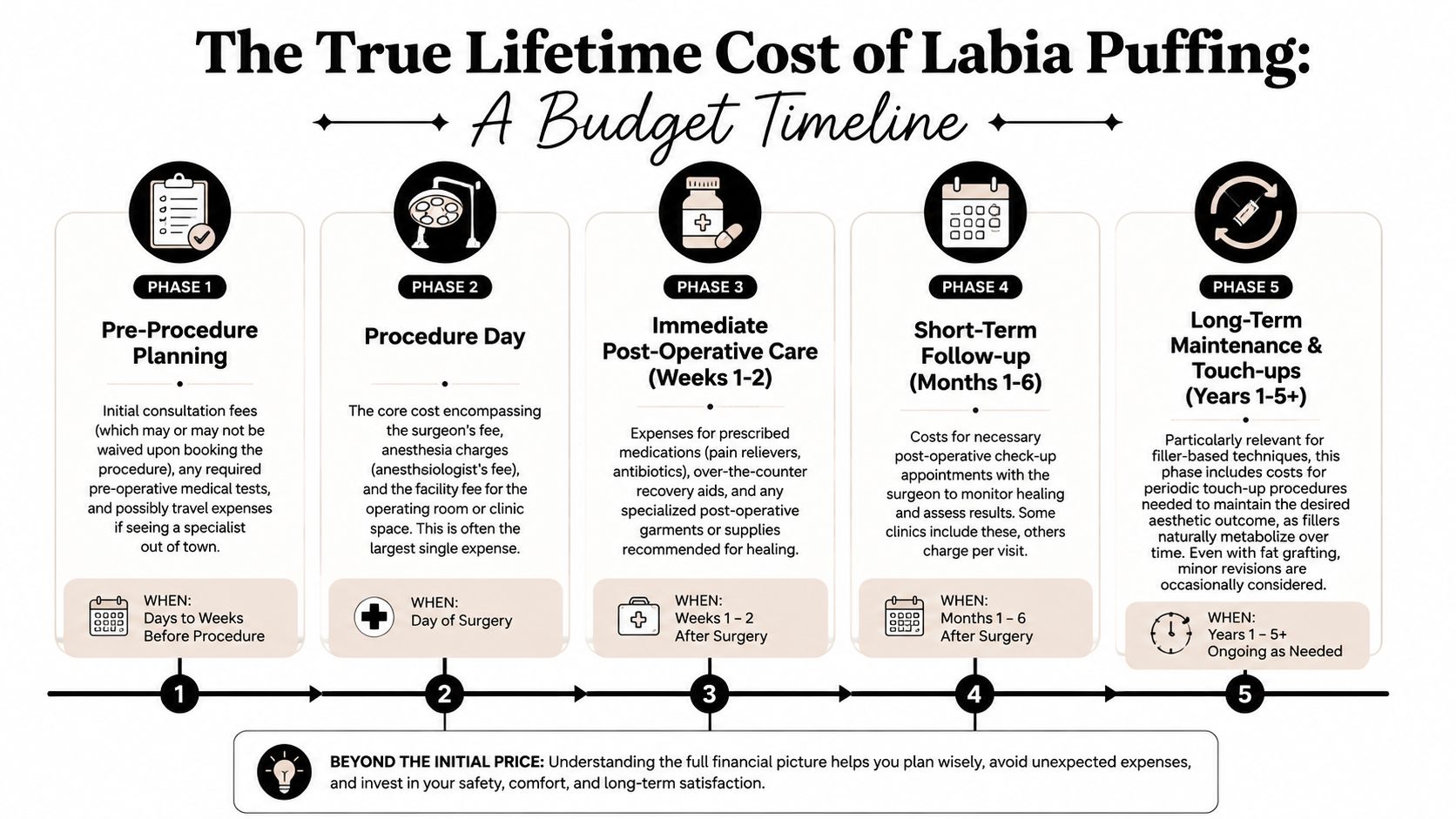
For budgeting purposes, labia puffing is better viewed as a financial commitment with phases. The starting quote matters, but it is only the first layer. Patients also need to account for what the fee includes, how often results may need to be refreshed, and whether there is any realistic chance of added cost for revisions or follow-up treatment.
Why the sticker price is only the starting point
A labia puff quote can look straightforward and still leave out meaningful expenses. One office may price only the injection visit. Another may bundle consultation time, topical or local anesthetic, post-procedure checks, and aftercare instructions into the same figure.
That difference changes the actual cost.
A careful comparison should confirm whether the quote includes:
- The full procedure plan, not just the treatment itself
- Product or grafting costs, if volume replacement requires more material than a basic package covers
- Facility and anesthesia fees, if treatment is done in a surgical setting
- Post-procedure care, including follow-up visits and routine prescriptions
- Future maintenance, especially if the expected result may fade over time
Practical rule: Compare total expected spending, not the advertised starting price. A lower quote can become the more expensive choice if it excludes follow-up care or leads to repeated maintenance sooner than expected.
The question that saves patients money
Patients who budget well usually ask two separate cost questions early.
- What will the first treatment cost me out of pocket?
- What am I likely to spend over the next few years to maintain the result I want?
That second question is where many budgets fail. A quote may be accurate for the day of treatment and still understate the true cost of choosing labia puffing. If maintenance is likely, or if the initial correction is modest and may need adjustment, the lifetime price can be much higher than the headline number suggests.
This is why I advise patients to treat labia puffing the way they would treat any elective investment. Ask for the first-year cost. Then ask what the practice expects after that. A transparent clinic should be able to explain both.
What Is Labia Puffing and How Does Technique Affect Price
A patient may hear one quote for a quick office treatment and another for a procedure done with harvesting, processing, and reinjection, then wonder why both are called labia puffing. The reason is simple. The term covers two different approaches, and each has a different cost structure over time.
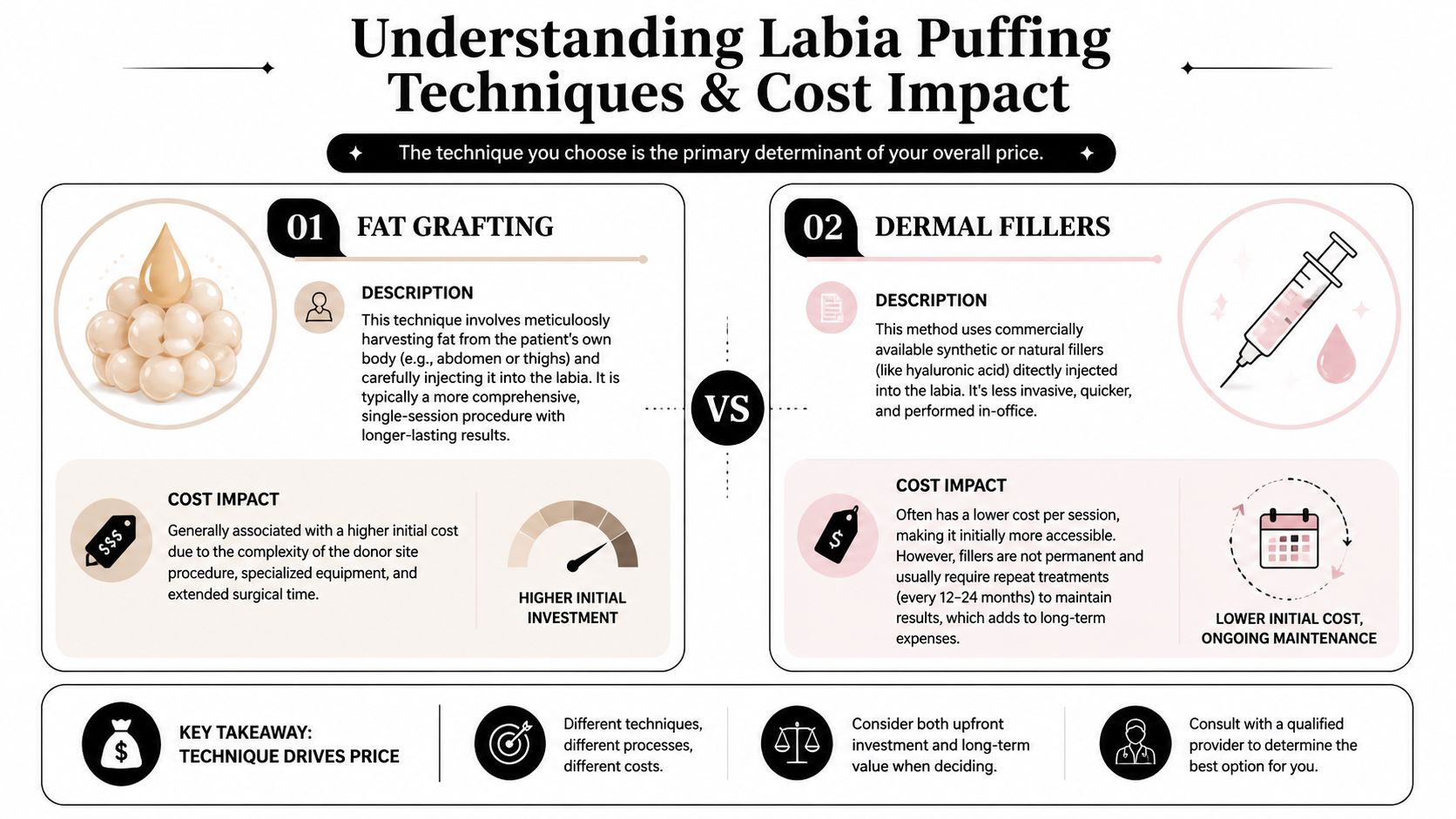
A labia puff is a volume-restoration procedure for the labia majora. In practice, that usually means one of two methods: hyaluronic acid filler or autologous fat transfer. According to Down There Urology's labial puff overview, treatment is often performed with filler or fat, office-based filler sessions may take about 30 minutes, and reported pricing can range from lower-entry filler fees to much higher totals for more involved fat-transfer cases.
Fillers are the lower-entry option
With filler, the provider injects a purchased product directly into the area to restore volume. The setup is usually simpler, the appointment is shorter, and the upfront bill is often lower than fat transfer.
That lower entry price matters, but so does duration. Filler can be a reasonable choice for a patient who wants a modest change, less downtime, and a smaller first payment. It often becomes the more expensive path over several years if repeat treatments are needed to maintain the look.
Fat transfer is the higher-upfront option
Fat transfer uses your own tissue, but it is not a simple injection visit. Fat has to be removed from a donor area, prepared, and then placed carefully for contour and symmetry. That adds time, supplies, staff, and sometimes a surgical facility.
The appeal is different. Some patients prefer using their own tissue and want to avoid ongoing filler appointments. The trade-off is a higher first bill, more recovery, and the possibility that some of the transferred fat will not survive, which can affect whether touch-ups are needed later.
What changes your quote
Technique changes price because it changes the whole treatment process, not just the final injection step.
Material cost
Filler quotes include the injectable product itself. Fat transfer quotes include harvesting and processing your own tissue.Procedure time
A short office injection generally costs less than a treatment that includes donor-site work and reinjection.Setting and staffing
The more steps involved, the more likely you are to see higher facility and personnel costs.Maintenance pattern
Filler often carries a lower first-year commitment but a higher chance of ongoing repeat spending. Fat transfer usually asks for more money upfront, with a different long-term maintenance profile.
If you want to compare how those choices can look in practice, reviewing labia puffing surgery before and after examples can help connect technique, price, and treatment goals.
A low quote may reflect a smaller treatment plan, a temporary option, or excluded steps that raise your total lifetime cost later.
An Itemized Breakdown of Your Labia Puff Quote
When a quote feels vague, it usually is. Patients are often given one number without being told which costs are bundled and which costs may appear later.
A useful benchmark comes from the broader genital aesthetic market. The Aesthetic Society reports an average labiaplasty cost of $3,665 based on the 2022 Aesthetic Plastic Surgery National Databank Statistics, and it explicitly states that this figure reflects standard surgeon and facility fees only, not anesthesia, tests, prescriptions, garments, or other ancillary costs, according to The Aesthetic Society's labiaplasty cost page. Even though labiaplasty and labia puffing are different procedures, the pricing lesson is the same: headline fees often understate the true all-in spend.
The parts of the quote
Here's the simplest way to read a labia puff estimate.
| Cost Component | Typical Price Range (USD) | Description |
|---|---|---|
| Procedure total | $1,350 to $6,000 | Commonly reported market range for many U.S. labia puff quotes, often influenced by technique and geography |
| Broader upper end by method | $1,350 to $12,000 | Reported wider span when comparing filler with fat transfer and more involved setups |
| Comparative benchmark | $3,665 | Average labiaplasty cost benchmark for surgeon and facility fees only, excluding several ancillary expenses |
What each line usually represents
Provider fee covers the clinician's time, technical skill, planning, and execution. In cosmetic surgery, experience and specialization often affect this part of the bill more than patients expect.
Facility fee pays for the room, equipment, supplies, staffing, and administrative overhead. This matters much more when the treatment is surgical rather than a simple office injection.
Anesthesia-related cost may be minimal or absent in a straightforward office filler visit, but it becomes a real budgeting issue in a more complex procedure.
What's often left out
Patients should ask directly whether the quote includes:
- Consultation charges if the office bills separately for the first visit
- Prescriptions and recovery supplies after treatment
- Routine follow-up appointments versus only the procedure day
- Touch-up policy if more volume is needed than originally expected
Ask for an all-inclusive quote in writing. If a clinic can't explain what is and isn't included, you're not looking at a reliable budget.
A careful consultation should separate included care from optional future care. That distinction matters because some practices bundle early follow-up, while others bill nearly every extra visit or add-on.
Why Labia Puff Costs Vary So Widely
A patient may bring in two quotes for what sounds like the same treatment and still be looking at a gap of thousands of dollars. That is common in labia puffing. Price differences usually come from who is performing the procedure, where the practice is located, and how customized the treatment plan becomes after examination.
Geography changes what clinics have to charge
Labia puff pricing often rises in cities with higher rent, staffing costs, and stronger demand for cosmetic care. Practices in major metro areas also tend to spend more on compliance, equipment, and private surgical space. Those costs are built into the quote whether the procedure is surgical or nonsurgical.
Patients sometimes read that as simple overcharging. Sometimes it is. Often, it is overhead.
Provider training changes more than the fee
This area is technically small and aesthetically unforgiving. A lower quote from a general injector and a higher quote from a surgeon or specialist in intimate aesthetics are not equal offers on paper or in practice.
A higher fee may reflect:
- Greater experience with genital tissue anatomy
- Better judgment on product choice or fat transfer candidacy
- More precise planning for symmetry, contour, and restraint
- Lower revision risk because the first plan is more realistic
That last point matters for total lifetime cost. Saving money on the first procedure can become expensive if the result is overfilled, under-corrected, short-lived, or disappointing enough to need revision.
Procedure scope changes after the consultation
Advertised pricing is often a starting point, not a final number. One patient may need a modest filler treatment in the office. Another may need more product, staged treatment, or a fat transfer approach with more recovery time, facility use, and follow-up.
I tell patients to pay attention to how a clinic explains that change. If the quote increases because your anatomy, tissue quality, or goals require a different plan, that can be reasonable. If the number increases without a clear explanation, that is a pricing problem.
A clear quote usually costs less in the long run
The better comparison is not low price versus high price. It is transparent quote versus vague quote.
A transparent practice should be able to explain why your price differs from an advertised special, whether touch-ups are likely, and how often maintenance may be needed if you choose filler. If monthly payments are part of your decision, review the clinic's cosmetic surgery payment plan options with the same care you give the procedure itself. Financing can make treatment more manageable, but interest and repeat sessions still affect what you ultimately spend over time.
Budgeting for Hidden Expenses and Long-Term Maintenance
The biggest mistake patients make is treating labia puff cost like a one-time purchase. For many people, it isn't.
According to Vie Aesthetics' discussion of labia puff filler longevity, hyaluronic acid filler is temporary and commonly lasts about 6 to 12 months, with some providers noting repeat treatment every 3 to 6 months or touch-ups around 9 to 12 months. The same source notes that fat grafting can last years, although part of the transferred fat is expected to reabsorb over time.
Filler has a maintenance schedule
This is the core lifetime-cost issue. Filler often looks more affordable on day one. But if you like the result and want to keep it, repeat visits become part of the plan.
Some clinics also frame pricing by product amount or package size. As noted in Dermatology and Laser Group's review of treatment pathways and pricing, available examples include NYC filler-based labia puffing around $1,800 to $3,600 for 2 to 4 syringes, AlloClae starting at $4,250, Exion at $2,000 for a 4-session series, and broader clinic pricing from $1,500 to $6,000 or more. The same page notes that some results may last about 12 to 18 months or around one year, which is why maintenance changes the long-run budget.
If you're comparing this with surgery budgeting, reviewing the average cost of labiaplasty can give useful context for how elective genital procedures are commonly priced overall.
Fat transfer changes the timeline, not the need for planning
Fat transfer may reduce how often you need retreatment, but it doesn't erase follow-up cost considerations. Some of the transferred fat may not survive long term. If retention is lower than expected or if you want more volume later, touch-up planning still matters.
That doesn't make fat transfer a poor choice. It just means you should budget for uncertainty instead of assuming one procedure ends the financial conversation.
Small costs add up
Patients often focus on the big quote and miss the smaller spending around it:
- Time away from work if you need a lighter schedule or downtime
- Travel costs if you choose a specialist outside your area
- Medications and comfort supplies after treatment
- Extra follow-up visits if they aren't included
If you're cost-conscious, ask for both the starting price and the likely maintenance path. Those are two different numbers.
Navigating Insurance Coverage and Financing Options
For most patients, insurance won't help with labia puff cost. These treatments are generally considered elective cosmetic procedures, and patient-facing pricing materials commonly note that they're usually cash-pay rather than insurance-covered.

That can feel discouraging at first, but it also means you should approach this like any other planned out-of-pocket purchase. The goal is to choose a payment path that doesn't create pressure later.
Common ways patients pay
Many practices work with one or more of these options:
Medical financing programs
These can spread payments over time. The upside is predictable monthly budgeting. The downside is that interest terms and approval requirements vary.In-house payment plans
Some clinics allow staged payments before the procedure or structured installments. This can be simpler than outside financing, but you need the terms in writing.Personal credit cards or loans
Some patients prefer flexibility and existing credit access. This may be convenient, but you should compare rates carefully.
If you're exploring structured payment options, this guide to cosmetic surgery payment plans is a practical place to review common approaches.
What to ask before you agree to financing
Don't stop at “Do you offer financing?” Ask more useful questions:
- When is the balance due
- Are there penalties for rescheduling
- Is the financing tied only to the procedure or also to follow-up care
- What happens if your treatment plan changes after consultation
A financing plan should support your decision, not rush it. If the monthly payment is the only part of the discussion, step back and look again at the total expected spend.
Your Consultation Checklist What to Ask About Cost
A good consultation should leave you with a quote you can use. If you walk out with a single round number and a lot of uncertainty, keep asking.
Bring this checklist with you and take notes during the visit.
Questions that uncover the real number
Is this quote all-inclusive
Ask whether the figure includes the procedure itself, facility use, anesthesia if needed, routine follow-up, and any recovery-related prescriptions or supplies.If this is filler, what exactly am I paying for
You want to know the planned product, the amount being used, and how future touch-ups are typically priced.If this is fat transfer, what are the separate components
Ask whether donor-site treatment, fat processing, and any surgical facility expenses are included.
Questions that protect your long-term budget
What follow-up visits are included
Some offices include standard post-procedure checks. Others bill them separately.What happens if I want more volume later
Ask how enhancements or touch-ups are priced and whether they're treated as a new procedure.What is your revision policy
Not every dissatisfaction issue leads to a formal revision, but you should still know how the practice handles concerns and additional costs.
A transparent provider won't just give you a price. They'll explain the assumptions behind it.
Questions that help you compare clinics fairly
- Why does your quote differ from lower advertised prices I've seen
- What setting will my procedure be done in
- What costs could still change after my exam or treatment planning
When you ask direct questions, you stop being a passive shopper and become an informed buyer. That's the best way to avoid surprises with labia puff cost.
If you're comparing procedures, providers, recovery expectations, and financing in one place, Labiaplasty.com offers practical educational resources to help you prepare for a more informed consultation.
