

The idea of taking arnica before surgery is a hot topic, but one that’s also surrounded by a lot of debate. Many people turn to homeopathic arnica hoping it will minimize the bruising and swelling that inevitably follow a procedure. The most important thing to remember, though, is that you must get your surgeon’s approval before taking any supplements, as they can sometimes interfere with medications or even affect your bleeding risk.
What Is Arnica and How Does It Supposedly Help With Recovery?
When surgeons and patients talk about using arnica for recovery, it helps to know exactly what it is and what it’s expected to do. Arnica is a well-known herbal remedy that comes from the bright yellow Arnica montana flower, a plant native to the mountainsides of Europe. For centuries, it’s been a go-to in traditional medicine for soothing sore muscles, sprains, and bruises.
Its modern role in surgical recovery comes from the belief that it has anti-inflammatory properties. The theory is that arnica helps calm the body's natural, and sometimes dramatic, response to the trauma of an incision. By potentially taming inflammation, it might reduce the tell-tale swelling and discoloration that come with healing. This is exactly why it has become such a popular complementary therapy for cosmetic procedures. You can learn more about how to prepare for your surgery in our guide on 8 essential labiaplasty recovery tips.
Different Forms for Different Uses
Arnica isn’t a one-size-fits-all remedy. You’ll find it in two main forms, and they are used for completely different purposes:
- Homeopathic Oral Pellets: These are tiny, dissolvable pellets you take by mouth. Because they contain a highly diluted amount of arnica, this is the form most often studied and recommended for use before and after a surgical procedure.
- Topical Creams and Gels: These are applied directly onto the skin. It is absolutely critical to understand that topical arnica should never be used on broken skin or open wounds, which makes it completely unsuitable for a fresh surgical site.
The Science Behind the Claims
The debate around arnica really boils down to the hard scientific evidence. While countless patients swear by it and report fantastic experiences, the clinical results are often mixed. That said, some studies have shown some pretty promising outcomes.
For example, a notable double-blind study on facelift patients examined the effects of taking homeopathic arnica both before and after their procedure. The results were clear: the group that received arnica had a significantly smaller area of bruising on both the first and seventh days after surgery compared to the group that got a placebo. You can read the full research about these arnica findings.
This kind of evidence is what keeps the conversation going about whether taking arnica before surgery can be a truly beneficial part of a recovery plan. The key, however, is that it must be part of a broader, medically supervised strategy that starts with a direct and honest conversation with your surgeon.
The Real Evidence on Taking Arnica Before Surgery
If you're considering arnica before surgery, it's easy to get lost in a sea of personal stories and conflicting advice. So, what does the actual scientific evidence show? The truth is, the medical community remains divided, and for good reason—the clinical studies have produced a real mixed bag of results.
Some studies point to a clear benefit. For instance, well-designed trials, like one involving facelift patients, have shown that those who took homeopathic arnica had significantly less bruising than patients who received a placebo. It's these kinds of positive results that keep the interest in arnica alive as a pre-surgical supplement.
But for every study showing a benefit, you can find another that reports little to no difference at all. And that's the heart of the debate. This inconsistency across the research makes it tough for medical professionals to land on a firm consensus.
Sifting Through the Clinical Data
To get a clearer picture, researchers often turn to meta-analyses, which are essentially "studies of studies." By pooling data from multiple clinical trials, they can filter out the noise and see if a genuine, repeatable effect exists. When it comes to arnica, these larger analyses offer some fascinating—though nuanced—insights.
One comprehensive meta-analysis from 2021 looked at 30 different studies on homeopathic Arnica montana. It concluded that when used both before and after surgery, arnica had a small but statistically significant overall effect on recovery, comparable to some anti-inflammatory drugs.
But here’s the interesting part: the analysis found that taking arnica before surgery had a less pronounced, non-significant effect. In contrast, using it after surgery showed a much stronger positive outcome. You can explore the full meta-analysis on arnica and surgery to dig into the statistical details yourself.
Arnica's Effectiveness Preoperative vs Postoperative Use
To make this clearer, the 2021 meta-analysis broke down the timing. The table below summarizes the findings, showing just how different the impact was depending on when the arnica was taken.
| Timing of Use | Hegde's g Effect Size | Statistical Significance |
|---|---|---|
| Preoperative Use Only | -0.122 | Not Significant |
| Postoperative Use Only | -0.264 | Significant |
The takeaway here is that the data leans heavily in favor of postoperative use. While starting it beforehand isn't necessarily harmful (unless you have specific contraindications), the real power seems to kick in once the healing process has already begun.
The bar chart below visualizes data from a specific study on facelift patients, comparing bruising between the arnica group and the placebo group.
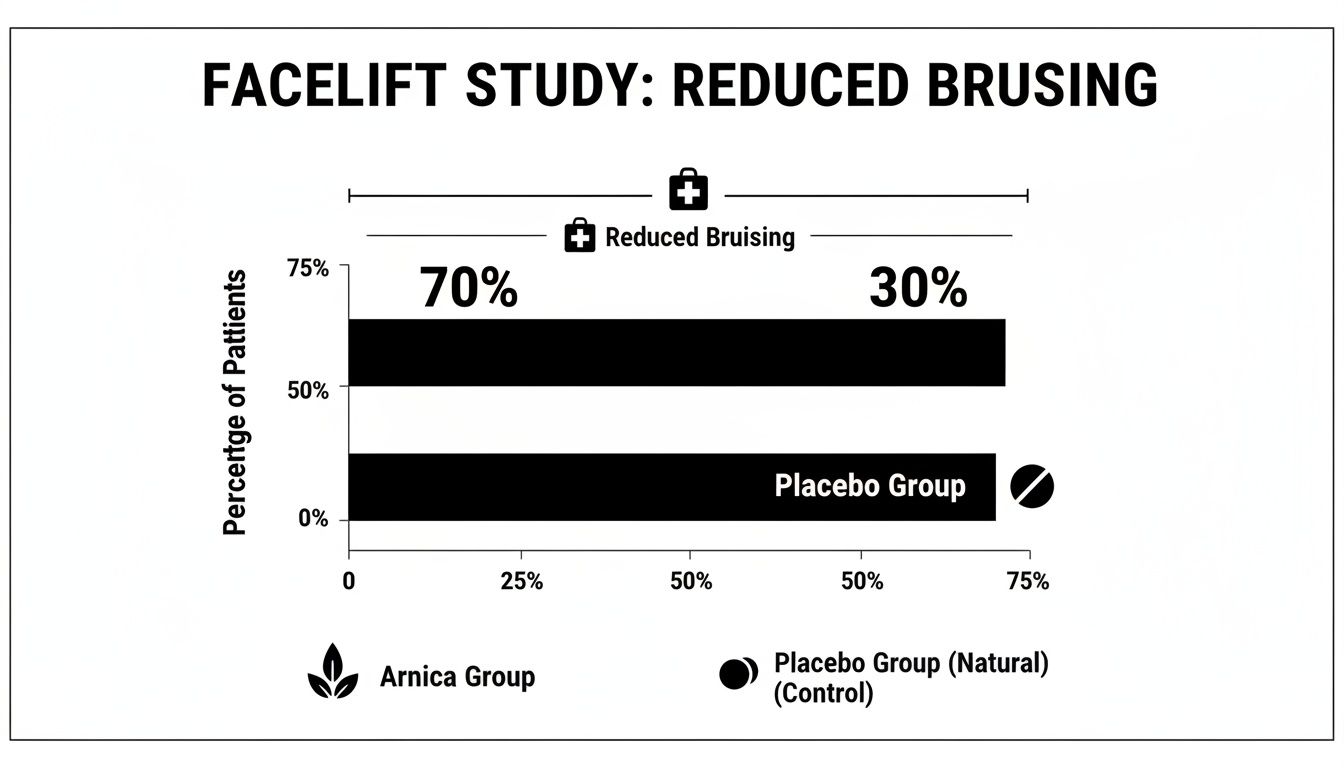
This image really highlights the positive results seen in some studies, showing a measurable drop in bruising for those who took arnica. It's a perfect example of why the conversation continues.
Making an Informed Decision
So, what does all this mean for you? It means that while there's some promising evidence out there, arnica is not a magic bullet for preventing post-surgical bruising and swelling.
The conflicting results highlight a critical takeaway: your decision to use arnica shouldn't be based on anecdotes or a single study. It requires a balanced view of all the evidence and, most importantly, a direct conversation with your surgeon.
Ultimately, your doctor is the only one who can help you weigh the potential benefits against any possible risks, especially when considering your unique health profile and the specifics of your procedure. They are your best resource for navigating the gray areas and making a choice that supports a safe and successful recovery.
How to Choose the Right Arnica Product

Once your surgeon gives you the green light to consider using arnica before surgery, the next challenge is figuring out which product to buy. Walking into a health food store or browsing online can feel overwhelming. You’ll see creams, gels, and tiny, dissolvable pellets.
Knowing the difference between these formulations is absolutely critical for both safety and getting the results you want. The most important distinction is between products you take by mouth and those you apply to your skin. Each is designed for a completely different purpose.
Oral Homeopathic Arnica Pellets
When surgeons suggest arnica to help with surgical recovery, they are almost always talking about the oral homeopathic pellets. These are small, often slightly sweet-tasting pellets that you dissolve under your tongue, allowing the preparation to be absorbed systemically into your body.
This is the form used in most of the clinical studies that look at arnica's effect on post-surgical bruising and swelling. Because these pellets work from the inside out, they’re the right choice for addressing the body's natural inflammatory response to the trauma of a procedure.
You’ll see labels with markings like "30C" or "200CK"—that's the homeopathic potency. These codes indicate how many times the original arnica tincture has been diluted. A higher number, like 200CK, means a higher dilution. Don't worry about deciphering this yourself; your surgeon will give you specific guidance on the exact potency and dosage they want you to use.
Topical Arnica Gels and Creams
Topical arnica products—the gels, creams, and ointments—are meant for a totally different job. You apply these directly to the skin to soothe localized problems like muscle soreness or bruises, but only on unbroken skin.
This safety rule is non-negotiable and incredibly important to understand:
- Never, ever apply topical arnica to an open wound. It can cause severe irritation, slow down your healing, and seriously increase your risk of infection.
- Keep all topical products far away from your surgical incisions. You must wait until your surgeon has confirmed your incisions are fully closed and healed before you even think about applying any creams to that area.
Here’s the simplest way to think about it: oral pellets are for systemic, internal preparation and healing. Topical creams are for external, localized relief on intact skin only. When you're preparing for surgery, the conversation will almost exclusively be about the oral homeopathic form. Always read the labels carefully to make sure you're buying the right product and follow your surgeon’s instructions to the letter.
Understanding the Safety Risks and Drug Interactions

While the idea of a smoother recovery with arnica is appealing, your safety is always the absolute priority. Like any supplement, arnica isn't completely risk-free, especially when you’re heading into a surgical procedure. Getting a clear picture of these potential issues is a non-negotiable step before you even think about using arnica before surgery.
The biggest concern, by far, revolves around bleeding. Surgery involves making precise, controlled incisions, and your body's ability to form clots is absolutely essential for a safe procedure and a smooth recovery. Anything that gets in the way of this natural process can open the door to serious complications.
The Critical Interaction with Blood Thinners
The number one safety flag with arnica is its potential to increase your risk of bleeding. This is because arnica may have anticoagulant properties—in other words, it can thin the blood and slow down the body’s clotting response. This effect becomes particularly dangerous when it's combined with other medications or supplements that do the same thing.
Think of it this way: your blood's clotting ability is like a carefully balanced scale. Surgery itself already tips it slightly. A prescription blood thinner is a calculated, known adjustment made by your doctor. But adding arnica without your surgeon’s knowledge is like throwing an unknown weight onto that scale. It could tip it dangerously far in the wrong direction.
It is absolutely essential to stop taking any supplement with blood-thinning effects at least two weeks before your surgery, unless your surgeon specifically tells you otherwise. This includes arnica, fish oil, vitamin E, and ginkgo biloba.
Being upfront about every single supplement you take is one of the most important things you can do for a safe outcome. Even remedies that seem harmless can have a powerful impact in a surgical setting. You can find more details in our complete guide to understanding labiaplasty risks and complications.
Potential Conflicts with Anesthesia and Other Risks
Beyond the bleeding risk, there are other important safety factors to consider. The interaction between herbal supplements and anesthesia isn't always well-documented, which is exactly why anesthesiologists prefer patients to stop all non-essential substances beforehand. An unknown interaction could potentially affect your blood pressure, heart rate, or how your body processes the anesthetic drugs.
Here are a few other key points to keep in mind:
- Allergies: Arnica is part of the Asteraceae plant family, which also includes ragweed, daisies, and marigolds. If you have a known allergy to these plants, you could have an allergic reaction to arnica, too.
- Topical Use: This is crucial—topical arnica creams and gels should never be applied to broken skin or anywhere near your surgical incisions. Doing so can cause severe irritation and dramatically increase your risk of infection.
- Scientific Caution: Research echoes these concerns. One major scientific review, for example, cautioned that taking arnica before surgery might increase bleeding or interfere with certain clotting factors in some individuals. You can read the full research about these safety findings for a deeper dive.
All of this brings us back to one core message: total transparency is key. Your surgeon and anesthesiologist need a complete, accurate picture of everything you're taking to map out the safest possible plan for your procedure. Always, always talk to your doctor before adding anything new to your pre-surgical routine.
How to Have an Effective Conversation With Your Surgeon
Bringing up any supplement, including arnica before surgery, can feel a little intimidating. But this conversation is one of the most important steps you can take to ensure a safe procedure and a smooth, comfortable recovery. Your surgeon is your partner in this process, and an open dialogue builds the foundation of trust you need.
Remember, you aren't questioning their expertise by asking about complementary therapies. You're being an active participant in your own care, which is something every good surgeon encourages. Approaching the topic with genuine curiosity and a collaborative spirit is the best way to get the clear guidance you’re looking for. A well-informed surgeon is critical for a great outcome, and finding the right one is a key part of your journey. You can explore our detailed guide on choosing the right surgeon for your labiaplasty for more insights.
Simple Ways to Start the Conversation
You don’t need a complicated script to bring up arnica. A simple, direct question works best. During your pre-operative consultation, it’s easy to open the door to this topic with a few straightforward phrases.
Try one of these conversation starters:
- "I’ve been reading about ways to help with post-surgical bruising, and arnica keeps coming up. What is your experience with it?"
- "Do you have a specific protocol for supplements? I'm curious about your thoughts on patients using arnica."
- "To make sure I'm fully prepared, I wanted to ask if you recommend or approve of using homeopathic arnica for my procedure."
Your surgeon’s response will give you a clear sense of their stance. Some may have a standard protocol they recommend, while others may advise against it based on their clinical experience or the specifics of your procedure.
Questions to Ask Your Surgeon About Arnica
Once you've opened the conversation, it helps to have a few follow-up questions ready. This ensures you leave the consultation with all the information you need to make a safe and informed decision. Your goal is to understand their specific recommendations, not just get a simple yes or no.
Here is a checklist of key questions to guide your discussion:
- Do you approve of me using arnica for this specific surgery? This is the most important question.
- If so, which form do you recommend? (e.g., oral homeopathic pellets)
- What specific potency and dosage should I use? (e.g., Arnica 30C, three times a day)
- When exactly should I start and stop taking it? This timing is critical.
- Are there any potential interactions with my other medications or your anesthesia plan?
Having this dialogue ensures everyone on your care team is on the same page. This collaborative approach helps prevent any misunderstandings and supports the safest, most effective surgical outcome possible.
Answers to Your Top Questions About Arnica
Even with all the information out there, you probably still have a few practical questions about using arnica around your surgery. Let's clear up the most common ones so you can feel confident talking with your surgeon.
When Should I Start Taking Arnica Before My Surgery?
This is one of the most common questions, and the answer depends entirely on your surgeon. There’s no universal schedule. Some surgeons might say to start a day or two before your procedure, others might suggest the morning of, and a few may even recommend a protocol that begins a week ahead of time.
It is absolutely critical to follow your surgeon's direct instructions on this. They'll tailor their advice based on your health, the specific surgery you’re having, and their own clinical experience. Never self-prescribe or start taking arnica without their explicit approval and clear guidance on the exact timing.
Is It Safe to Use Topical Arnica Gels After Labiaplasty?
No. You should never apply topical arnica gels or creams to an open wound or a fresh surgical incision like those from a labiaplasty. These products are made for unbroken skin only. Putting them near your incisions can cause serious irritation, get in the way of proper healing, and significantly increase your risk of infection.
Sure, you could use a topical product on a random bruise on your arm or leg, but you have to keep it far away from the surgical area. Don't even think about using any topical remedies down there until your surgeon has examined you and confirmed that your incisions are fully closed and healed.
Key Takeaway: Think of it this way: oral arnica is for internal, systemic support (if your surgeon approves it). Topical arnica is for external, unbroken skin only and should be kept far from any surgical site until you get the official all-clear.
What Are Proven Alternatives to Arnica for Recovery?
Your surgeon will give you a list of evidence-based methods to manage swelling and bruising after your procedure. These standard post-op instructions are your most reliable path to a smooth recovery and should always be your top priority over any complementary therapies.
These proven strategies almost always include:
- Rest: Giving your body the downtime it needs to heal is non-negotiable.
- Ice: Using cold compresses on and off for the first 48-72 hours helps constrict blood vessels. It's one of the single most effective ways to keep swelling and bruising in check.
- Elevation: Keeping the area propped up whenever possible helps reduce fluid buildup.
- Gentle Movement: Following your surgeon’s advice on when and how to move is key to promoting healthy circulation without putting any strain on your incisions.
Some surgeons might suggest other supplements, like bromelain (an enzyme from pineapple), but these also require a direct green light from your doctor. Your surgeon’s primary post-operative care plan is your most important tool for recovery.
Should I Avoid Arnica if I Have a Ragweed Allergy?
Yes, you should be extremely cautious if you have a known ragweed allergy. Arnica is part of the Asteraceae plant family, which also includes ragweed, sunflowers, marigolds, and chrysanthemums. Because they're botanical relatives, there's a real risk of cross-reactivity.
If you’re allergic to any of these common plants, you could have an allergic reaction to arnica, which could be anything from a mild skin rash to more serious symptoms. This is a critical piece of your medical history to share with your surgeon during your consultation. An existing allergy is often a very strong reason to skip arnica altogether and avoid any complications during your recovery.
At Labiaplasty.com, our mission is to provide you with the clear, reliable information you need to feel confident and prepared. We offer a comprehensive resource to help you find qualified surgeons, understand recovery, and make empowered decisions about your health. Explore our global doctor directory to start your search.
